How Many Calories Are in a Rainbow Roll? A Detailed Nutritional Guide
A typical rainbow roll contains approximately 300 to 400 calories per 8-piece serving. This sushi roll combines crab or imitation crab, avocado, cucumber inside, and an assortment of fish like tuna, salmon, and yellowtail on top, contributing to its calorie count.
Knowing the exact calories in a rainbow roll matters if you’re monitoring your daily intake or following a balanced diet. The variety of ingredients—each with its fat, protein, and carbohydrate content—affects the total calories and nutritional balance you consume.
This article will break down the calorie content of each key component in a rainbow roll, compare it to other sushi rolls, and provide tips for choosing healthier sushi options when dining out or ordering in.
What Makes Up a Rainbow Roll?

Core Ingredients and Their Calories
The rainbow roll traditionally contains sushi rice, crab (or imitation crab), avocado, cucumber, and a colorful mix of raw fish slices placed on top. Each ingredient adds calorie content based on its portion size and fat content.
Sushi rice is the bulk of the roll's calories due to both the quantity used and added sugar and vinegar in its preparation. Avocado contributes healthy fats, while the fish adds lean protein and some fat, varying by fish type.
- Sushi rice (1 cup): ~240 calories
- Crab meat (1 oz): ~30 calories
- Avocado (1/4 fruit): ~60 calories
- Tuna, salmon, yellowtail (3 oz total): ~120 calories
Common Variations Impacting Calories
Variations of the rainbow roll can include different types or amounts of fish, addition of mayonnaise-based sauces, or tempura elements, all of which raise the calorie count noticeably.
Some variations replace imitation crab with real crab, which slightly alters calories and nutritional value. Adding cream cheese or deep-fried components will increase fat and calories substantially.
- Spicy mayo adds roughly 50-70 calories per serving
- Tempura flakes add about 100 calories
- Substituting real crab adds 10-20 calories more
Calorie Comparison: Rainbow Roll vs. Other Sushi Rolls

Lower-Calorie Sushi Rolls
California rolls usually range from 250 to 300 calories, often being lighter because they lack fatty fish. Veggie rolls tend to be even lower in calories due to the absence of fish and oily ingredients.
Choosing rolls without mayonnaise or tempura also keeps calorie content down, making options like cucumber roll or salmon sashimi better for calorie-conscious diners.
- California roll: 250-300 calories
- Cucumber roll: 150-200 calories
- Vegetable roll: 180-220 calories
For more on this, see our related guide: What Is a Dragon Roll? A Complete Guide to This Popular Sushi Roll.
Higher-Calorie Sushi Rolls
Rolls like the spicy tuna or tempura shrimp roll can easily exceed 400 calories depending on sauce and frying method. Rainbow rolls sit between simpler rolls and heavy specialty rolls in terms of energy density.
Cream cheese, tempura batter, and rich sauces are primary contributors to higher calorie counts, turning sushi from a light meal into a calorie-dense indulgence.
- Spicy tuna roll: 400-450 calories
- Tempura shrimp roll: 450-500 calories
- Rainbow roll with mayo sauce: up to 450 calories
Nutritional Benefits of a Rainbow Roll
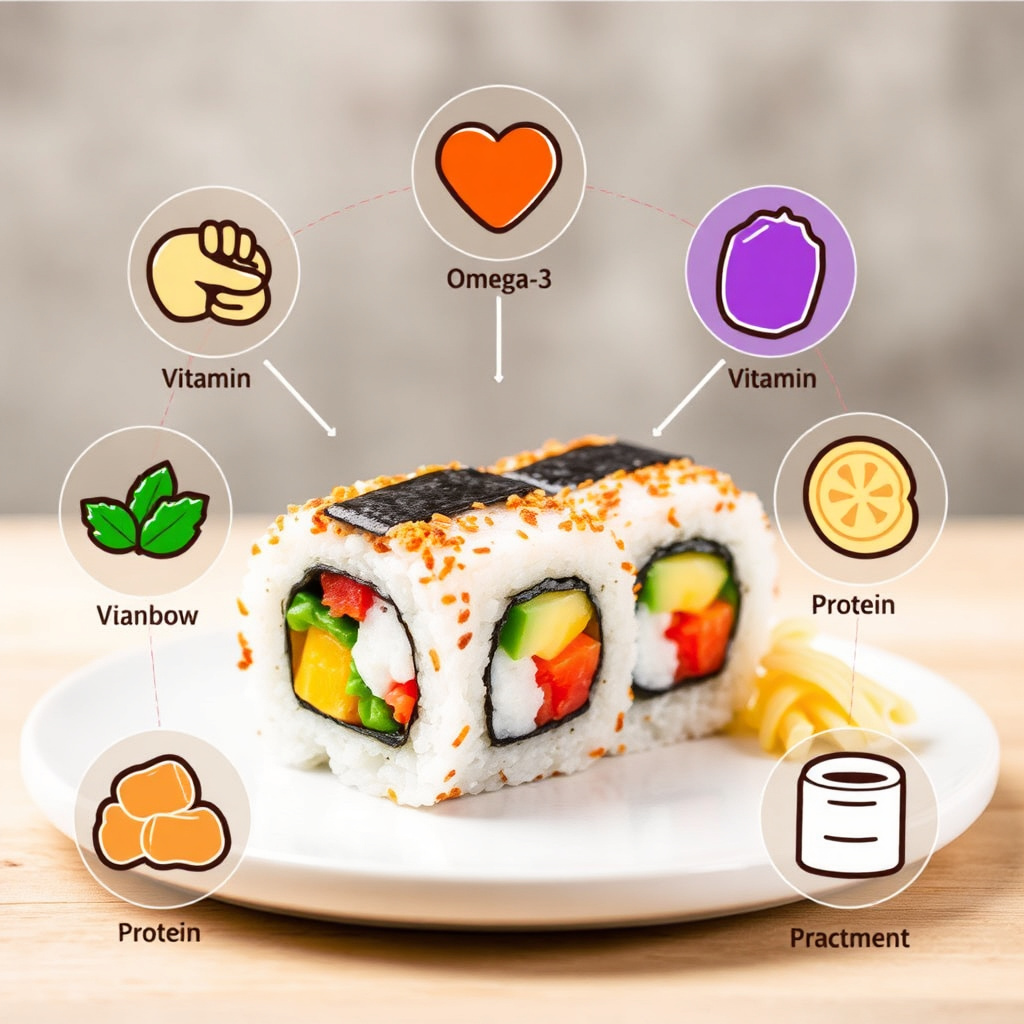
Rich Source of Omega-3 Fatty Acids
Rainbow rolls feature various types of fish like salmon and tuna which provide omega-3 fatty acids, essential for heart health and brain function. These healthy fats can reduce inflammation and promote cardiovascular wellbeing.
Eating sushi rolls diverse in fish types ensures a broader range of nutrients and omega-3 benefits compared to rolls with only one fish type or just imitation crab.
- Salmon and tuna are high in omega-3
- Omega-3 supports cognitive and heart health
Vitamin and Mineral Content
Avocado adds fiber and potassium, while fish contributes vitamins such as B12 and minerals like selenium and iodine. These nutrients support metabolism, immune function, and thyroid health.
Sushi rice enriched with vinegar also aids digestion and provides a mild amount of energy through carbohydrates necessary for daily function.
- Avocado: fiber, potassium, vitamin E
- Fish: vitamin B12, selenium, iodine
Controlling Calories When Eating a Rainbow Roll

Portion Size Matters
Eating a full 8-piece rainbow roll as a single meal generally delivers 300-400 calories, so splitting it with others or reducing intake can help maintain calorie goals.
Sharing or pairing sushi with low-calorie sides like miso soup or seaweed salad balances the meal without raising calorie intake drastically.
- Typical full rainbow roll: 8 pieces
- Consider 4 pieces plus a side to reduce calories
For more on this, see our related guide: What Is a Rainbow Roll? A Complete Guide to This Popular Sushi Dish.
Sauces and Extras to Watch
Avoid heavy sauces like spicy mayo or eel sauce which add sugar and fat, increasing the calorie load. Using soy sauce sparingly keeps sodium in check without many additional calories.
Ask for sushi without mayo-based sauces or request sauce on the side to control exactly how much is consumed.
- Spicy mayo adds about 50-70 calories
- Eel sauce contains sugar and calories
- Soy sauce is low calorie but high sodium
Alternatives for Lower-Calorie Sushi Options

Vegetarian and Vegan Sushi Rolls
Veggie rolls made with cucumber, avocado, carrot, and asparagus provide significantly fewer calories, often between 150-220 per roll. They also contain fiber and vitamins but lack the omega-3 found in fish-based rolls.
For vegan options, combinations of plant-based ingredients keep calories lower while still offering flavor and nutrition.
- Cucumber roll: 150-200 calories
- Avocado roll: 200-220 calories
For further details about sushi varieties and nutrition, see the general sushi section on the Wikipedia page. Rainbow roll nutrition information on Wikipedia.
Sashimi as a Low-Calorie Choice
Opting for sashimi—thin slices of raw fish without rice—drops calories drastically. A 3-ounce sashimi serving typically contains 100-150 calories and provides pure protein and omega-3 fats with no carbs.
This option suits those reducing carbs or calories while still enjoying fresh fish flavors and nutrients.
- 3 oz sashimi: 100-150 calories
- High protein and low carb
Calorie Comparison of Popular Sushi Rolls
Here’s a quick comparison of common sushi rolls by calorie content and ingredients to help you choose based on your dietary needs.
| Roll Type | Calories (8 pcs) | Key Ingredients | Typical Variations |
|---|---|---|---|
| Rainbow Roll | 300-400 | Fish variety, avocado, crab, rice | With or without spicy mayo, tempura flakes |
| California Roll | 250-300 | Crab, avocado, cucumber, rice | Includes real or imitation crab, sometimes mayonnaise |
| Spicy Tuna Roll | 400-450 | Tuna, spicy mayo, rice | Spicy sauce varies by restaurant |
| Vegetable Roll | 150-220 | Cucumber, avocado, carrot, asparagus | Fully vegan, no fish or mayonnaise |
| Tempura Shrimp Roll | 450-500 | Shrimp tempura, avocado, rice | Often includes mayonnaise, eel sauce |
Frequently Asked Questions
Is a rainbow roll healthy?
A rainbow roll offers a good balance of protein, healthy fats, and carbohydrates but can be high in calories depending on portions and sauces. It’s a nutritious choice if eaten in moderation.
How many calories are in one piece of rainbow roll?
One piece of rainbow roll typically contains about 35 to 50 calories, varying by size and ingredients.
Does a rainbow roll contain raw fish?
Yes, the rainbow roll generally includes raw fish slices such as tuna, salmon, and yellowtail layered on top of the roll.
Can I make a rainbow roll lower calorie?
Yes, you can reduce calories by avoiding sauces like mayo, eating fewer pieces, or choosing rolls with more vegetables and less rice.
How does a rainbow roll compare calorie-wise with sashimi?
Sashimi has fewer calories than a rainbow roll since it contains only fish without rice or added sauces. It is richer in protein and lower in carbohydrates.
Key Takeaways
- A full rainbow roll has about 300-400 calories depending on ingredients.
- Fish variety provides beneficial omega-3 fats and protein.
- Avoiding sauces and controlling portions can reduce calories.
- Vegetable rolls and sashimi are lower-calorie sushi options.
Conclusion
Choosing to enjoy a rainbow roll involves understanding its calorie and nutritional profile. With approximately 300 to 400 calories per roll, it offers a nutrient-rich mix of fish, avocado, and rice that can fit into a balanced diet when eaten thoughtfully. Watching toppings like spicy mayo and portion sizes helps balance enjoyment with calorie awareness, making it a moderate option for sushi lovers mindful of their intake.
If your goal is to enjoy sushi with minimal calorie impact, consider vegetable rolls or sashimi which deliver fewer calories without sacrificing flavor or nutrients. For those who appreciate fish but wish to moderate calorie intake, sharing a rainbow roll or avoiding added sauces are practical strategies. Refer to the calorie comparisons above to pick options that fit your specific needs and preferences, such as choosing a California roll for fewer fats or the rainbow roll for omega-3 benefits.
Next time you order or prepare sushi, think about your nutritional goals and choose accordingly. Whether you savor a full rainbow roll, a lighter vegetable roll, or a handful of sashimi slices, balancing flavor and health can enhance your sushi experience. Being familiar with calorie counts and ingredients empowers you to enjoy this dish as part of a sensible, pleasurable eating routine.


One Comment