Udon vs Soba: Which Japanese Noodle Suits Your Taste and Health Best?
Udon and soba are two of the most popular traditional Japanese noodles, each offering distinct flavors, textures, and nutritional profiles. Udon noodles are thick and chewy, made primarily from wheat flour, while soba noodles are thin, slightly nutty, and crafted mainly from buckwheat. Choosing between udon vs soba depends on your personal preference for texture and taste as well as dietary considerations, since soba tends to be healthier due to its buckwheat content.
Understanding the differences between these two noodle types matters because they shape not only your meal’s flavor but also its nutritional value. Udon’s soft, starchy character makes it hearty and comforting, ideal in warm broth dishes, whereas soba’s subtle earthiness pairs well with light dipping sauces or salads, catering to those seeking something lighter or gluten-sensitive. Both noodles hold deep cultural significance and versatility across various Japanese dishes.
This article breaks down udon vs soba by comparing their ingredients, preparation methods, nutritional benefits, taste profiles, cooking techniques, and the occasions best suited for each. By the end, you’ll have a clear idea of when to choose either noodle and how to enjoy them authentically at home or in restaurants.
Origins and Ingredients of Udon and Soba

History and Cultural Roots
Udon traces its roots back to ancient Japan, with records dating to the Nara period (710–794 AD). It became widely popular due to its simple wheat flour base and easy preparation, making it a staple in various regions. Soba originated around the Edo period (1603–1868) and is closely tied to buckwheat farming, particularly in northern Japan where wheat was harder to grow.
The cultural role of these noodles also differs: udon is often associated with comfort food and regional variations like Sanuki udon in Kagawa Prefecture, while soba is linked to rituals such as the New Year's dish to symbolize longevity. These histories contribute to their enduring popularity in Japanese cuisine.
Primary Ingredients and Variations
Udon noodles consist mainly of wheat flour, water, and a pinch of salt, giving them a chewy texture and pale color. Some recipes add baking soda to enhance elasticity. Variants exist depending on thickness and length but maintain the fundamental wheat base.
Soba noodles combine buckwheat flour with varying amounts of wheat flour to balance texture and prevent brittleness. Pure buckwheat soba (100% buckwheat) is prized for stronger, nuttier flavor but is less common due to manufacturing difficulty. Commercially, soba with 80% buckwheat or less is typical, providing different taste intensities.
- Udon: 100% wheat flour
- Soba: 80–100% buckwheat with some wheat flour
- Regional variants influence thickness and texture
Taste and Texture Differences

Flavor Profiles
Udon noodles have a mild wheat flavor that acts as a blank canvas, soaking up the flavors of accompanying broth or sauce. Their subtle taste complements savory dishes featuring soy-based broths or rich stocks, creating a hearty and filling experience.
Soba noodles offer a distinct earthy and slightly nutty flavor due to the buckwheat content. This stronger taste pairs well with simpler condiments, such as soy sauce or sesame, often enjoyed cold to highlight its natural aroma.
Textural Contrast
The thick and slippery texture of udon provides a chewy, satisfying bite that holds up well in hot soups or stir-fried dishes. Its dense structure adds to the feeling of fullness and comfort.
Soba noodles are thinner and firmer with a slight graininess from buckwheat, giving them a delicate yet chewy mouthfeel. When served chilled, they maintain a pleasant snap, making them refreshing in warmer weather.
Nutritional Aspects of Udon vs Soba

Caloric and Macronutrient Content
Udon is primarily composed of carbohydrates from wheat, offering about 190 calories per cooked cup with minimal fat and moderate protein content. Its simple starch structure means it digests quickly, providing quick energy but less sustained fullness.
Soba noodles contain more fiber and protein thanks to buckwheat, delivering roughly 113 calories per cooked cup. They have a lower glycemic index than udon, which contributes to steadier blood sugar levels after eating.
- Udon: Higher calories, lower fiber
- Soba: Lower calories, higher protein and fiber
Health Benefits and Considerations
Udon’s wheat base means it contains gluten and less dietary fiber. It provides an excellent source of quickly absorbable carbs but may not be suitable for gluten-intolerant individuals. Its bland taste allows versatility but can require additional nutritious toppings.
Buckwheat in soba contains antioxidants and essential amino acids, offering cardiovascular and metabolic benefits. Soba can cater better to gluten-sensitive eaters if 100% buckwheat is used, but most store-bought versions include some wheat.
- Soba may aid digestion and heart health
- Udon good for fast energy replenishment
Cooking Techniques and Serving Styles

Proper Cooking Methods
Udon is boiled briefly to maintain its springy texture and served hot in brothy soups or stir-fries. Overcooking can make it overly soft, so timing is vital. After boiling, it’s often rinsed in cold water for cold udon recipes to enhance chewiness.
Soba requires careful handling as it cooks quickly and can become mushy. It is typically boiled for 3 to 5 minutes, then rinsed in cold water to stop cooking and remove excess starch, especially when served chilled. Precise timing preserves texture.
- Avoid overcooking both noodles to maintain texture
- Rinse soba thoroughly after boiling
Traditional Serving Methods
Hot udon is commonly served in deep bowls topped with tempura, green onions, and kamaboko (fish cake). Cold udon salads also exist but are less traditional. Regional specialties include kitsune udon and curry udon highlighting varied broths and sauces.
Soba is famous when served cold on bamboo trays (zaru soba), accompanied by dipping sauce with wasabi and scallions, or hot in simple broth. It is also popular in fusion dishes like soba noodle salads and stir-fries that feature diverse toppings.
Choosing Between Udon vs Soba for Your Meal
Flavor Preferences and Meal Context
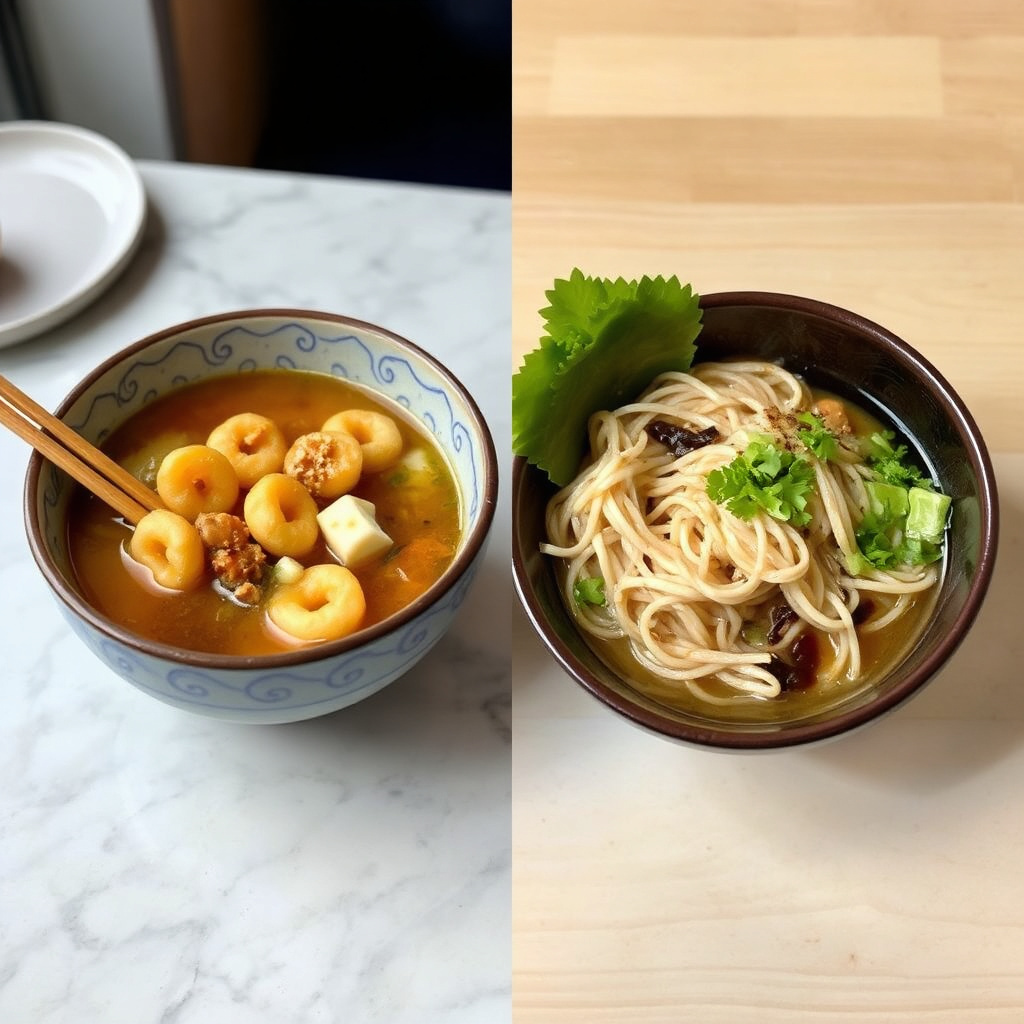
If you prefer a smooth, bland noodle that absorbs the flavor of your broth, udon is a go-to choice. It works best in warming, comforting dishes and complements heavier broths and toppings. Udon appeals to those seeking a gentle palate experience.
Soba’s distinctive nutty flavor shines when served with light sauces or cold. It’s ideal for a refreshing summer meal or for diners seeking lighter, healthier options. Its texture and taste stand out even with minimal seasoning.
Dietary Needs and Health Goals
For those aiming for sustained energy release and a modest calorie count, soba offers advantages with more fiber and protein. Its lower glycemic impact suits those managing blood sugar. However, gluten-free eaters should verify buckwheat content carefully.
Udon's wheat flour makes it unsuitable for gluten sensitivities but can be easier to digest for some individuals. It fits well when quick energy replenishment is needed, such as after physical activity or in colder seasons requiring filling meals.
Pairing Udon and Soba with Japanese Dishes

Complementary Toppings for Udon
Popular udon accompaniments include tempura shrimp or vegetables, green onions, poached eggs, and kamaboko. Rich broths like dashi or curry enhance its chewy texture. These toppings balance the mild base with savory, crunchy, or creamy elements.
Regional variations also influence toppings; for example, Sanuki udon might have a simple soy-based broth with scallions, while curry udon offers a thick, flavorful sauce. Udon’s versatility allows endless pairings compatible with its neutral taste.
- Tempura
- Green onions
- Kamaboko
- Curry-based sauces
For more details about the types of Japanese noodles including udon and soba, the Japanese noodles Wikipedia page offers comprehensive information. Japanese noodles on Wikipedia.
Ideal Accompaniments for Soba
Soba pairs beautifully with light, clean accompaniments like nori seaweed, wasabi, chopped scallions, and a dipping sauce made from soy and mirin. Cold soba with these sides highlights its distinct nutty flavor and firm texture.
It also works well with vegetables such as daikon radish or mushrooms, as well as tempura. These combinations emphasize balance and simplicity, letting the soba noodle’s quality shine through.
- Wasabi and scallions
- Soy-based dipping sauce
- Nori seaweed
- Light tempura pieces
Udon vs Soba Noodles: Key Differences Comparison
This table summarizes essential characteristics of udon and soba to help clarify their distinctions at a glance.
| Characteristic | Udon | Soba |
|---|---|---|
| Primary Ingredient | Wheat flour | Buckwheat with some wheat flour |
| Noodle Thickness | Thick and chewy | Thin and firm |
| Flavor Profile | Mild, neutral | Earthy, nutty |
| Typical Serving Temperature | Hot in broth, sometimes cold | Often served cold or hot |
| Calorie Content (per cup) | About 190 kcal | About 113 kcal |
| Dietary Fiber | Low | Higher |
| Gluten Content | Contains gluten | Usually contains gluten, except pure buckwheat |
| Common Dishes | Soup and stir-fry | Zaru soba (cold), light broths |
Frequently Asked Questions
Is soba gluten-free?
Most soba noodles contain some wheat flour, making them not fully gluten-free. However, 100% buckwheat soba does exist and is gluten-free, so checking the label or recipe is essential for those with gluten intolerance.
How should I store udon and soba noodles?
Fresh or refrigerated noodles should be kept cold and used within their expiration date. Dried noodles can be stored in a cool, dry place for several months. Once cooked, consume promptly or refrigerate to avoid spoilage.
Can udon and soba be used interchangeably in recipes?
While both are noodles, udon’s thick, chewy texture suits rich soups and stir-fries, whereas soba’s thin noodles work better cold or lightly brothy dishes. Swapping them changes the dish’s taste and texture significantly.
Which noodle is better for weight management?
Soba noodles are lower in calories and higher in protein and fiber compared to udon, making them a preferable option for those seeking weight management or healthier eating choices.
Are there any traditional occasions to eat soba or udon?
Soba is traditionally eaten during New Year’s Eve in Japan for longevity and good fortune, while udon is commonly enjoyed year-round as a comfort food, especially in colder months.
Key Takeaways
- Udon noodles are thick, wheat-based, and mild-flavored, ideal for hearty hot dishes.
- Soba noodles are thin, buckwheat-based, offering a nutty flavor and better nutritional profile.
- Soba generally offers more protein, fiber, and lower calories compared to udon.
- Choice depends on flavor preference, meal type, and dietary needs.
Conclusion
When deciding between udon vs soba, the choice comes down to your taste and dietary priorities. Udon’s soft texture and neutral flavor excel in soup and comfort dishes, while soba delivers a more distinct flavor and better nutritional benefits, especially for those watching calories or seeking fiber. Both enrich Japanese cuisine uniquely and can be enjoyed in countless traditional and modern preparations.
For everyday meals, if you want a warm, filling bowl, udon is a dependable pick, pairing well with broths and rich toppings like tempura. On the other hand, if you desire a lighter, refreshing dish or are seeking health-conscious options, soba is a strong candidate—especially the 100% buckwheat varieties. Each noodle type’s serving style offers opportunities to experience authentic Japanese flavors thoughtfully.
Your next step might be experimenting with both noodles in your kitchen or exploring Japanese restaurants that specialize in traditional preparations. Understanding these noodles’ characteristics will enrich your appreciation and help you select the perfect choice depending on the occasion or your nutritional goals.