What Is Moo Shu Pork? A Flavorful Classic Chinese Dish Explained
Moo Shu pork is a classic Chinese dish consisting of shredded pork stir-fried with vegetables like cabbage, mushrooms, and bamboo shoots, typically served with thin pancakes and hoisin sauce. This dish is known for its savory, slightly sweet flavors and the unique way it's eaten by wrapping the filling in pancakes.
Originating from Northern China, Moo Shu pork offers a balanced combination of textures and tastes, making it a favorite both in China and abroad. Its distinctive presentation—where diners create small pancakes filled with the pork mixture—adds an interactive element that enhances the dining experience.
In this article, we’ll explore the history of Moo Shu pork, the key ingredients that create its signature taste, how it is traditionally prepared and served, its variations, and tips for making it at home so you can appreciate this beloved Chinese stir-fry dish fully.
Understanding the Origins of Moo Shu Pork

Historical Background and Regional Roots
Moo Shu pork has its roots in Northern China, particularly in Beijing cuisine, dating back to the Qing Dynasty. The name 'Moo Shu' refers not to the pork itself but to the wood shavings or flowers of the osmanthus tree, symbolizing the delicacy's elegant presentation and texture.
Over time, the dish evolved and spread throughout China, becoming popular in American Chinese cuisine with slight modifications to suit local tastes. The traditional Northern style emphasizes a balance of meats and crunchy vegetables.
Cultural Significance and Popularity
Moo Shu pork is cherished for its communal dining style, as it encourages sharing and assembling pancakes at the table, reflecting the social nature of Chinese meals. Its popularity in Chinese restaurants worldwide stems from this interactive eating method and its harmonious flavors.
The dish also illustrates Chinese culinary principles, such as combining different textures and flavors—savory, sweet, and umami—to create a satisfying eating experience that appeals to many palates.
Key Ingredients in Moo Shu Pork

Mandatory Components for Authentic Flavor
At the heart of Moo Shu pork is shredded pork, usually from lean cuts like pork loin, stir-fried quickly to maintain tenderness. The dish also includes julienned vegetables such as cabbage, bamboo shoots, and wood ear mushrooms, which provide contrasting texture and mild earthiness.
Other important components include eggs, scrambled and mixed in, and aromatics like garlic and ginger that enhance the overall flavor. Hoisin sauce adds the sweet and savory notes that tie the dish together.
- Shredded pork loin
- Cabbage
- Bamboo shoots
- Wood ear mushrooms
- Eggs
- Garlic and ginger
- Hoisin sauce
The Role of Moo Shu Pancakes and Sauces
Moo Shu pork is traditionally served with thin pancakes, sometimes called Mandarin pancakes. These soft, pliable wraps allow diners to scoop the pork and vegetable filling along with a bit of hoisin sauce, creating a flavorful bite.
Hoisin sauce is the standard condiment, lending a sweet, tangy, and salty profile to the dish. Some variations incorporate plum sauce or additional chili for heat, adapting to personal preferences while preserving the dish’s character.
- Mandarin pancakes
- Hoisin sauce
- Optional plum or chili sauce
Traditional Preparation Techniques for Moo Shu Pork
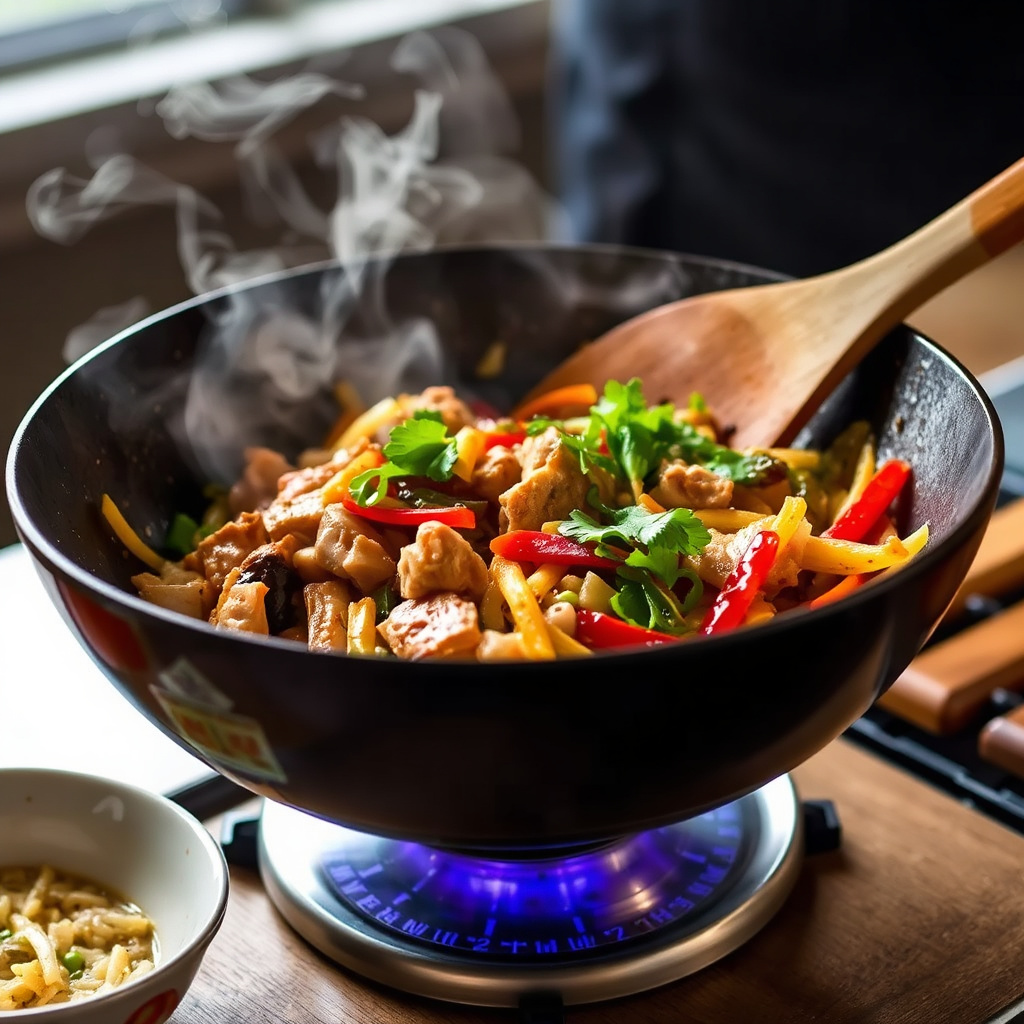
Stir-Frying the Pork and Vegetables
Stir-frying is key to achieving the tender yet crisp texture in Moo Shu pork. The pork is first marinated and quickly cooked on high heat, then removed while the vegetables are stir-fried briefly to retain crunch. Finally, the pork is returned to the wok and mixed with scrambled eggs and sauces for a well-rounded consistency.
Timing and heat control are essential to prevent overcooking, ensuring that the pork remains juicy and the vegetables maintain their bright colors and texture, contributing to a fresh and appetizing dish.
Serving and Assembling the Dish
Once cooked, the filling is plated alongside the warm pancakes and hoisin sauce. Diners then spread a spoonful of pork and vegetables onto a pancake, add hoisin, and wrap it like a small burrito.
This method not only preserves the dish’s heat and texture but also provides an engaging dining experience that highlights the mix of flavors in every bite.
Variations and Adaptations of Moo Shu Pork

Alternative Proteins and Vegetarian Versions
Although pork is traditional, alternative proteins like chicken, beef, shrimp, or tofu are popular in variations of Moo Shu pork. These options accommodate dietary preferences while maintaining the essential stir-fry technique and vegetable base.
Vegetarian versions focus on mushrooms, tofu, and additional vegetables to replace meat, often with extra seasoning or umami-rich dried mushrooms to compensate for the protein’s flavor.
- Chicken
- Beef
- Shrimp
- Tofu
- Vegetarian with extra vegetables
Regional and International Twists
Outside of China, Moo Shu pork has been adapted with local ingredients and flavor preferences. For example, in the U.S., the dish sometimes includes carrots or green onions for added color and sweetness.
Additionally, pancakes may be swapped for tortillas or served with rice in some restaurant adaptations, reflecting culinary fusion trends that highlight how traditional stir-fry dishes evolve globally.
Making Moo Shu Pork at Home: Tips and Tricks

Ingredients Preparation and Marinating
Prepping ingredients before cooking is crucial for smooth, fast stir-frying. Shredding pork finely and marinating it briefly in soy sauce, Shaoxing wine, and cornstarch enhances tenderness and flavor.
Cut vegetables uniformly to ensure even cooking, and use fresh eggs for scrambling. Having all components ready prevents overcooking and flavor loss during the quick stir-fry process.
Cooking Techniques and Assembly
Use a wok or large skillet over high heat and cook ingredients in batches to avoid overcrowding, which can cause steaming instead of searing. Quickly combine ingredients and add sauces at the end to finish.
Warm pancakes before serving to keep them pliable and serve hoisin sauce on the side for customizable flavor. This approach reproduces the authentic restaurant experience in your own kitchen.
Health Considerations of Moo Shu Pork

Nutrition Profile and Benefits
Moo Shu pork is a relatively balanced dish, offering protein from pork and eggs, fiber from vegetables, and moderate carbohydrates from the pancakes. The stir-frying method uses minimal oil, preserving nutrients and reducing excess fat compared to deep-frying.
The inclusion of various vegetables enhances vitamin and mineral intake, contributing to a wholesome meal when eaten in sensible portions.
For a detailed history and cultural background of Moo Shu pork, this Wikipedia article provides extensive information. Moo Shu Pork on Wikipedia.
Considerations for Dietary Restrictions
People watching sodium intake should use low-sodium soy and hoisin sauces, as these condiments can be high in salt. For gluten sensitivities, look for gluten-free versions of soy sauce and ensure pancakes are made from rice or alternative flour bases.
Vegetarian or vegan adaptations require omitting eggs and meat and choosing plant-based sauces to keep the dish suitable for dietary needs without losing flavor.
Moo Shu Pork Variations Comparison
Here’s a comparison of popular Moo Shu pork variations highlighting protein choice, flavor profile, and dietary suitability.
| Variation | Protein Source | Flavor Notes | Diet Suitability |
|---|---|---|---|
| Traditional Moo Shu Pork | Pork | Savory, sweet, umami | Standard omnivore |
| Chicken Moo Shu | Chicken | Milder, savory | Omnivore, lean protein |
| Vegetarian Moo Shu | Tofu & vegetables | Earthy, umami from mushrooms | Vegetarian, vegan with tweaks |
| Seafood Moo Shu | Shrimp or fish | Light, slightly sweet | Omnivore, pescatarian |
| Beef Moo Shu | Beef | Robust, hearty | Omnivore |
Frequently Asked Questions
Why is it called Moo Shu pork?
The name 'Moo Shu' refers to the osmanthus tree's flowers, symbolizing delicate texture and presentation, not the pork itself.
What are Moo Shu pancakes made of?
Moo Shu pancakes are thin, soft wraps usually made from flour, water, and sometimes egg, similar to a thin crepe, designed to hold the filling without breaking.
Can Moo Shu pork be made gluten-free?
Yes, by using gluten-free soy sauce and hoisin sauce alternatives and making pancakes from rice or gluten-free flours.
Is Moo Shu pork served with rice?
Traditionally, Moo Shu pork is served with pancakes rather than rice, allowing the filling to be wrapped and eaten like a small roll.
How long does it take to cook Moo Shu pork?
After preparation, the stir-fry itself usually takes about 10-15 minutes, requiring high heat and quick cooking for the best texture.
Key Takeaways
- Moo Shu pork features shredded pork and vegetables wrapped in thin pancakes with hoisin sauce.
- Its roots trace back to Northern China, highlighting communal dining traditions.
- Variations include chicken, vegetarian, seafood, and beef versions for different tastes.
- Making it at home requires quick stir-frying and prepping all ingredients beforehand.
Conclusion
Understanding Moo Shu pork involves appreciating its combination of tender shredded pork, crisp vegetables, and the unique method of serving with thin pancakes and hoisin sauce. The decision to enjoy or prepare this dish revolves around valuing a flavorful stir-fry that balances textures and interactive presentation. Recognizing its historical and cultural roots adds depth to the experience beyond just the taste.
For those interested in trying or cooking Moo Shu pork, choices vary from the classic pork and cabbage combination to adaptations using chicken, tofu, or seafood. Each variation suits different dietary needs and preferences while retaining the dish’s character. Following traditional stir-frying methods and using key sauces like hoisin ensures the best authentically inspired results, making it a versatile dish for home kitchens or dining out.
If you want to bring this dish into your routine, start by sourcing fresh ingredients and practicing simple wok techniques. Experiment with alternative proteins or vegan versions to fit your lifestyle. Whether dining socially or cooking solo, Moo Shu pork offers a rewarding, flavorful experience that connects modern kitchens to centuries of Chinese culinary heritage.


One Comment