Yang Chow Fried Rice Origin: Tracing the Roots of This Classic Dish
Yang Chow fried rice originates from the Chinese-American cuisine tradition, specifically attributed to the chef Mr. Yang Chow, who popularized this style of fried rice in the mid-20th century. Despite often being associated with traditional Chinese cooking, its roots lie primarily in the United States, where Chinese immigrants adapted local tastes and ingredients.
This dish's significance lies in its role as a quintessential example of Chinese-American culinary innovation, blending classic stir-fry techniques with Western preferences for presentation and ingredients such as shrimp, char siu pork, and scrambled eggs. Understanding its origin offers insight into the cultural exchange and adaptability within immigrant communities.
This article explores the history behind Yang Chow fried rice, examining its creator, the dish's evolution, and its place in Chinese-American cuisine. We’ll also compare this classic with other fried rice varieties and answer common questions about its background.
Who Was Chef Yang Chow?

Early Life and Career
Chef Yang Chow is credited with inventing the fried rice dish that bears his name, although details about his life remain somewhat scarce. He was a Chinese immigrant who established a popular restaurant in Los Angeles in the 1950s, catering to an American audience eager for exotic flavors presented in familiar formats.
By combining traditional Chinese cooking methods with ingredients accessible in the US, Chef Chow crafted dishes that appealed broadly. Yang Chow fried rice was one such creation, balancing classic Chinese seasoning with the tastes of mid-20th century America.
Impact on Chinese-American Cuisine
Chef Chow’s fried rice became a signature dish, symbolizing how Chinese culinary traditions were adapted to fit American palates. His approach not only popularized the dish but also helped define the identity of Chinese-American food in California and beyond.
This influence paved the way for many other fusion dishes, highlighting immigrant creativity and the exchange between cultures that shapes American food history.
Ingredients That Define Yang Chow Fried Rice

Key Components and Their Significance
Yang Chow fried rice is recognized for its use of shrimp, char siu pork, scrambled eggs, and peas, combined with jasmine rice and a light soy sauce seasoning. These ingredients create a delicate balance of flavors and textures that differentiate it from other fried rice varieties.
The inclusion of shrimp adds a seafood element that enhances umami, while char siu pork contributes sweetness and depth. The eggs provide richness, and peas introduce a subtle crunch, resulting in a harmonious dish enjoyed across many Chinese-American menus.
- Shrimp
- Char siu pork
- Scrambled eggs
- Green peas
- Jasmine rice
For more on this, see our related guide: Yang Chow Fried Rice vs House Fried Rice: Which One Should You Try?.
Ingredient Variations and Regional Differences
Though the classic recipe sticks to these elements, many versions substitute or add ingredients such as barbecued chicken or diced ham, depending on availability and local taste preferences. Variations might also tweak soy sauce amounts for lighter or richer flavors.
These regional and personal tweaks underscore the dish’s flexibility, demonstrating how Yang Chow fried rice fits within the broader category of Chinese fried rice history by adapting to contexts over time.
Cooking Techniques Behind the Recipe
Wok Hei and Stir-Frying Method
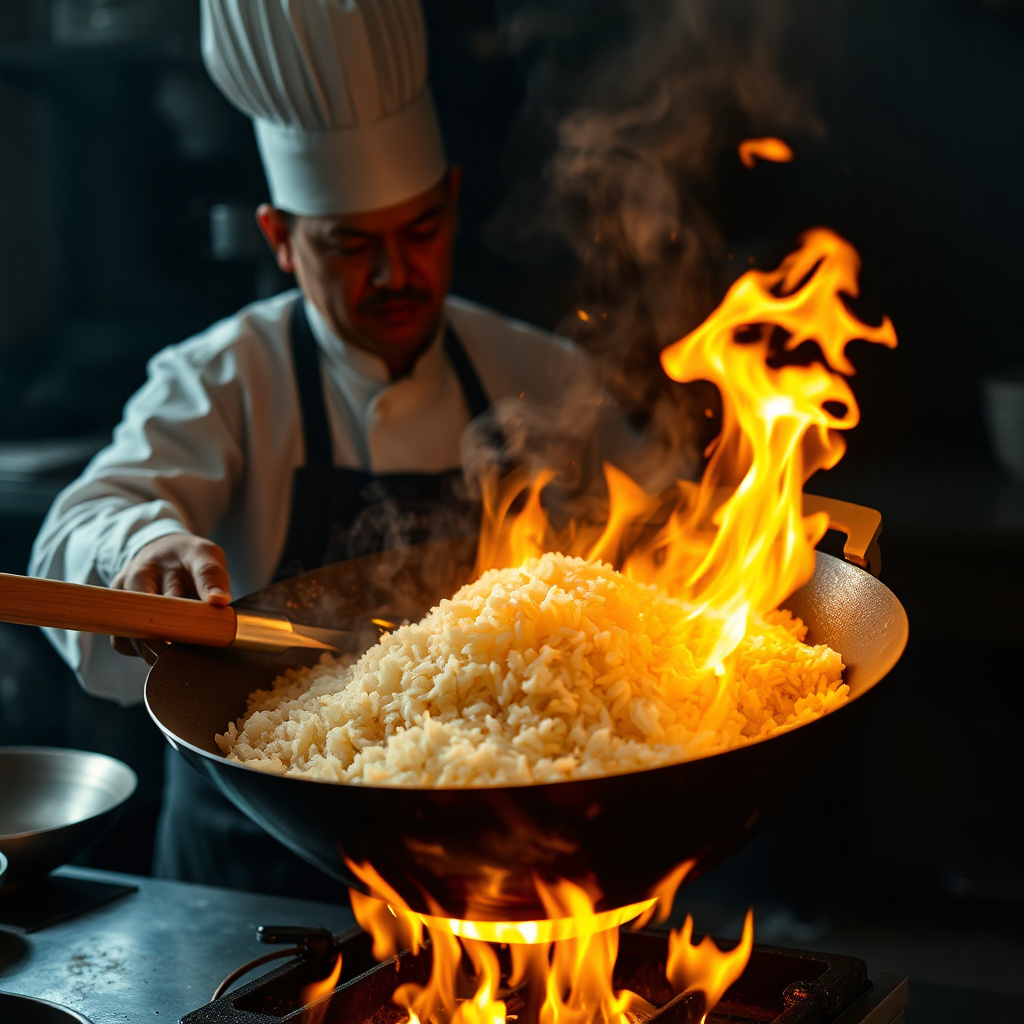
Achieving the characteristic smoky taste known as 'wok hei' is essential in authentic Yang Chow fried rice preparation. This involves cooking rapidly over high heat in a seasoned wok, ensuring ingredients are quickly seared without becoming soggy.
The method requires constant tossing and high flame control to prevent steaming the rice, which preserves its texture and infuses the dish with the unique flavor imparted by the hot wok.
- Use of a street-clean wok
- High heat cooking
- Continuous stirring
Prepping Ingredients for Balanced Flavor
Properly preparing each ingredient ensures the finished dish has balanced flavors and consistent texture. Proteins like shrimp and pork are diced uniformly, while eggs are scrambled lightly before mixing with rice to distribute richness evenly.
Vegetables such as peas must be fresh or frozen and added towards the end to retain their bright color and snap, complementing the warm, savory rice mixture.
Yang Chow Fried Rice in the Context of Chinese-American Cuisine

Role in Chinese-American Food Culture
Yang Chow fried rice has become a staple dish in Chinese-American restaurants, representing the successful integration of Chinese flavors with American dining preferences. It’s often served as a main dish or as part of family-style meals.
The dish’s popularity exemplifies how Chinese immigrant chefs tailored their recipes to appeal broadly while respecting their culinary heritage, contributing to an evolving food culture.
For more on this, see our related guide: How to Make Chow Fun: A Step-by-Step Guide to Perfect Cantonese Rice Noodles.
Comparing to Traditional Chinese Fried Rice
Unlike traditional fried rice varieties from regions like Yangzhou or Canton, Yang Chow fried rice tends to have more pronounced ingredients like shrimp and barbecued pork and uses jasmine rice more commonly found in the US.
The seasoning is often lighter, making it more accessible to American taste buds, which differentiates it from the stronger sauces or simpler styles of mainland Chinese fried rice.
How Yang Chow Fried Rice Spread Across America

From Los Angeles to Nationwide Popularity
Originating in Los Angeles’s Chinatown, Yang Chow fried rice spread quickly across Chinese-American eateries nationwide as immigrants moved and opened restaurants. Its appealing flavor profile made it a mainstay on many menus.
Its adaptability and straightforward preparation helped it become a go-to comfort food, particularly in the Western United States, eventually influencing restaurants coast to coast.
For an in-depth overview of the history and variations of fried rice, including related dishes, see the Chinese fried rice history on Wikipedia. Chinese fried rice history on Wikipedia.
Modern Interpretations and Fusion
Contemporary chefs experiment with Yang Chow fried rice by incorporating new ingredients and presentation styles, occasionally adding spicy sauces or vegetable variants to cater to changing palates.
This evolution keeps the dish relevant, showcasing its role not only as a traditional favorite but also as a canvas for culinary creativity within Chinese-American cuisine.
Yang Chow Fried Rice Category Comparison
Here’s how Yang Chow fried rice compares to other common fried rice styles across key characteristics.
| Category | Main Proteins | Rice Type | Flavor Profile | Typical Vegetables |
|---|---|---|---|---|
| Yang Chow Fried Rice | Shrimp, char siu pork | Jasmine rice | Light, slightly sweet | Peas, green onion |
| Yangzhou Fried Rice | Char siu, shrimp, chicken | Long grain rice | Savory, subtle soy | Carrots, green peas |
| Egg Fried Rice | Egg only | White rice | Simple, savory | Scallions |
| Korean Fried Rice | Spam, kimchi | Short grain rice | Spicy, tangy | Kimchi, vegetables |
| Indonesian Nasi Goreng | Shrimp, chicken | Jasmine rice | Sweet, smoky, spicy | Onions, chilies |
Frequently Asked Questions
Is Yang Chow fried rice a traditional Chinese dish?
Yang Chow fried rice is more accurately described as a Chinese-American creation, developed in the United States to suit local tastes rather than a traditional dish from mainland China.
What makes Yang Chow fried rice different from other fried rice dishes?
Its distinctive combination of shrimp, char siu pork, scrambled eggs, and peas, combined with light seasoning and jasmine rice, sets Yang Chow fried rice apart from other varieties.
Can Yang Chow fried rice be made vegetarian?
Yes, by omitting shrimp and pork and substituting with tofu or additional vegetables, a vegetarian version of Yang Chow fried rice can be prepared without losing its signature flavor balance.
Where did Yang Chow fried rice get its name?
The dish is named after Chef Yang Chow, who popularized this specific style of fried rice in his Los Angeles restaurant during the 1950s.
What rice is best for making Yang Chow fried rice at home?
Jasmine rice is preferred for Yang Chow fried rice due to its fragrance and texture, which complement the dish’s flavor profile and cooking method.
Key Takeaways
- Yang Chow fried rice originated in mid-20th century America by Chef Yang Chow.
- Distinctive ingredients include shrimp, char siu pork, scrambled eggs, and peas.
- Its cooking technique emphasizes high heat and wok hei for authentic flavor.
- The dish reflects Chinese-American culinary adaptation and fusion.
Conclusion
Determining the origin of Yang Chow fried rice reveals a fascinating story of immigrant culinary adaptation rather than a traditional Chinese recipe. Chef Yang Chow’s innovation exemplifies how Chinese-American cuisine evolved by blending authentic techniques with accessible ingredients and American tastes. This approach not only created a unique and beloved dish but also contributed to the broader narrative of food as a cultural bridge.
For those seeking to explore fried rice dishes, understanding Yang Chow fried rice’s history provides valuable context. Whether you favor the original composition with shrimp and char siu pork or prefer variations, it stands alongside regional fried rice styles like Yangzhou or Korean varieties as a testament to how fried rice evolves in different settings. Home cooks and restaurants alike benefit from appreciating this dish’s origins when choosing or preparing recipes.
If you want to experience Yang Chow fried rice’s distinctive flavor, start by sourcing fresh shrimp, quality char siu pork, and jasmine rice. Experimenting with authentic cooking techniques like stir-frying in a hot wok can help capture the signature smokiness. This exploration both honors the dish’s heritage and enriches your culinary repertoire with a dish emblematic of Chinese-American food culture.