How to Cut Sushi Rolls Perfectly Every Time
Cutting sushi rolls correctly is about using the right tools and technique to get clean, even slices without squashing the rolls. The key is to use a very sharp knife, slice in one smooth motion, and keep the roll intact while cutting.
This technique matters because poorly cut sushi rolls can fall apart or look messy, which affects both presentation and eating experience. If you're making sushi at home, mastering your knife skills will make your dishes look professional and appetizing.
In this article, we'll cover the best types of knives for sushi, how to prepare your roll before slicing, step-by-step cutting methods, and tips on cleaning your knife and maintaining your technique for perfect sushi cuts every time.
Choosing the Best Knife for Sushi Rolls

Traditional Sushi Knives
Traditional sushi knives, like the yanagiba, are long, thin, and extremely sharp. They're designed specifically for slicing sushi and sashimi with minimal pressure, which helps preserve the rice structure and prevent crushing.
These knives usually have a single bevel edge, allowing for very clean cuts but requiring skill and regular maintenance. Although they can be expensive, their precision makes them prized tools in sushi preparation.
- Long, slender blade for smooth slicing
- Single bevel edge for precision
- Requires sharpening expertise
Alternatives to Traditional Knives
If a traditional sushi knife isn’t accessible, a high-quality, very sharp chef’s knife or santoku can work well for cutting sushi rolls. The key is that the blade must be razor-sharp and wide enough to support the length of the roll.
Some home cooks prefer ceramic knives due to their sharpness and rust resistance, but the brittleness can pose a risk for sushi preparation if not handled with care.
- Sharp chef's or santoku knives
- Proper blade width prevents crushing
- Ceramic knives require gentle use
Preparing the Sushi Roll for Cutting
Wrapping and Setting the Roll
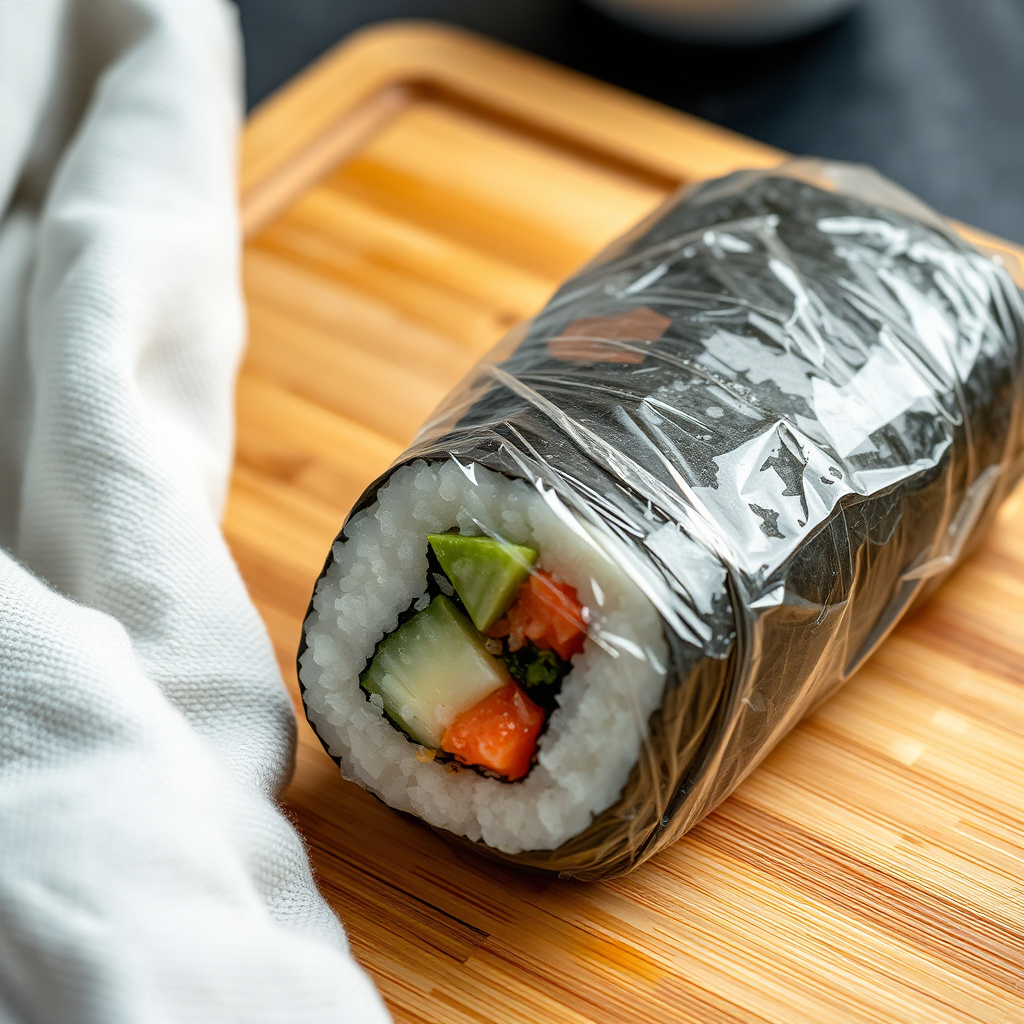
Before cutting, wrapping the sushi roll in plastic wrap helps hold it together, especially for looser rolls or those with soft ingredients. Setting the roll in the refrigerator for 10-15 minutes can firm it up, making slicing easier.
Applying gentle pressure to shape the roll evenly before cutting also ensures the final slices look uniform and hold their shape well during eating.
- Wrap in plastic wrap tightly
- Chill roll briefly to firm
- Apply light pressure to shape
For more on this, see our related guide: How to Roll Sushi Without a Mat: Simple Techniques for Perfect Sushi Rolls.
Preparing Your Cutting Surface
Use a clean, dry cutting board with a non-slip base to keep the roll stable while cutting. Having a damp cloth under the board can prevent slipping, which is important for safety with sharp knives.
Keep a bowl of warm water nearby to dip your knife in between cuts. This prevents rice from sticking to the blade and helps maintain clean, effortless slices.
- Use non-slip cutting board
- Damp cloth underneath to stabilize
- Warm water for cleaning knife blade
Step-by-Step Guide to Cutting Sushi Rolls

Making the First Cut
Start by slicing the sushi roll in half evenly with a single, precise motion. Apply gentle, consistent pressure without using a sawing action to avoid crushing the roll’s structure.
The first cut sets the rhythm and positioning for all the following cuts, so ensuring it’s clean and exact is important for overall presentation.
Slicing into Individual Pieces
After halving the roll, continue slicing each half into equal pieces using the same smooth, firm stroke. Wiping or dipping your knife in warm water between each slice keeps the blade clean and prevents sticking.
Aim for slices around 1–1.5 inches wide, which makes for manageable sushi pieces that hold together and present well on the plate.
- Slice roll halves into 1-1.5 inch pieces
- Clean knife between cuts
- Maintain a fluid slicing motion
Maintaining Your Knife for Clean Sushi Cuts

Sharpening Techniques for Sushi Knives
Sharpening sushi knives regularly is essential to keep their edge fine and effective. Use a whetstone with progressively finer grits and follow the blade’s bevel angle carefully during the sharpening process.
Proper sharpening not only improves cut quality but also reduces the effort needed to slice, protecting the sushi roll’s structure.
- Use whetstones with fine and coarse grits
- Maintain blade’s original bevel angle
- Sharpen gently and evenly
For more on this, see our related guide: How to Roll Sushi: Step-by-Step Guide for Perfect Sushi Rolls.
Cleaning and Storing Your Knife
Always hand wash your sushi knife immediately after use, drying it thoroughly to prevent rust. Avoid dishwashers, which can damage the blade’s precision edge and handle.
Store your knife in a wooden sheath or on a magnetic strip away from other utensils to protect the blade from nicks and maintain sharpness over time.
- Hand wash and dry promptly
- Avoid dishwasher use
- Store in a protective sheath or holder
Handling Special Sushi Rolls

Cutting Inside-Out Rolls
Inside-out rolls (uramaki) with rice on the outside can be trickier to cut because the rice tends to stick to the blade. Using the warm water dip method between cuts helps prevent sticking and tearing of the rice layer.
Cut firmly but gently, avoiding sawing motions that can pull the rice apart or scatter toppings.
- Dip knife in warm water between slices
- Use smooth slicing strokes
- Avoid sawing to maintain toppings
For a detailed overview of traditional sushi knives and their use, see the Sushi knife techniques on Wikipedia. Sushi knife techniques on Wikipedia.
Dealing with Soft or Watery Fillings
Rolls with soft fillings like avocado or sauces require gentle handling to avoid squashing. Sharpen your knife extra well to slice cleanly with less force, and chill the roll so the ingredients hold firmer for slicing.
Consider slightly thicker slices if the fillings are unusually soft for better structural integrity.
- Chill roll before slicing
- Use a very sharp knife
- Slice slightly thicker pieces
Comparison of Sushi Roll Cutting Tools
Here’s how different types of knives and tools compare for cutting sushi rolls effectively and cleanly.
| Knife Type | Blade Length (inches) | Sharpness | Ease of Use | Maintenance |
|---|---|---|---|---|
| Yanagiba Sushi Knife | 10-12 | Very High | Requires Skill | Regular Sharpening |
| Chef's Knife | 8-10 | High | Easy | Moderate |
| Santoku Knife | 7-8 | High | Easy | Moderate |
| Ceramic Knife | 7-8 | Very High | Handle with Care | Low |
| Plastic Sushi Cutter | Varies | Low | Very Easy | Minimal |
Frequently Asked Questions
Why should I dip my knife in water before cutting sushi rolls?
Dipping your knife in warm water prevents rice and sticky ingredients from clinging to the blade, allowing cleaner and smoother cuts without tearing the sushi roll.
Can I use a regular kitchen knife to cut sushi rolls?
Yes, a sharp chef’s or santoku knife can work well if you don’t have a traditional sushi knife. The knife should be very sharp and have a straight, wide blade to support the roll.
How thick should sushi roll slices be?
Slices should generally be about 1 to 1.5 inches thick. This size maintains the roll’s structure, making pieces easy to pick up and eat without falling apart.
Why does my sushi roll fall apart when I cut it?
Rolls may fall apart due to dull knives, improper wrapping, or too much pressure while cutting. Chilling the roll and using a sharp knife with smooth cuts helps keep slices intact.
How often should I sharpen my sushi knife?
Sharpen your sushi knife regularly depending on use, typically after every handful of uses, to maintain its razor edge and prevent crushing the roll during cutting.
Key Takeaways
- Use a very sharp knife, ideally a yanagiba or sharp chef's knife.
- Wrap and chill rolls before cutting to keep them firm.
- Slice in smooth, single motions; avoid sawing.
- Clean and sharpen your knife regularly for best results.
Conclusion
Mastering how to cut sushi rolls requires understanding the right balance between tool quality and technique. Using a sharp knife like a yanagiba or a well-maintained chef’s knife allows for clean, precise cuts that preserve the integrity of the roll. Equally important is preparing the roll by wrapping it tightly and chilling it briefly, which firms up its structure and makes slicing easier without squashing or tearing. Keeping your knife clean, wet, and sharp further aids in creating perfectly sliced sushi pieces that look appetizing and hold together well during serving and eating.
For home cooks, the best approach integrates a keen focus on knife sharpness and consistent slicing technique. Those working with delicate inside-out rolls or sushi with soft fillings should dip the blade in warm water between cuts and adjust slice thickness slightly to maintain shape. Comparing knife options, high-quality chef’s knives offer good versatility, while traditional yanagiba knives provide precision that sushi purists value. Ceramic knives can also work but need careful handling. Plastic cutters might help beginners but typically don’t deliver professional results. Experimenting with these methods and tools helps find the ideal setup that fits your sushi making style.
Ultimately, practice is key to cutting sushi rolls effectively. Begin with simple rolls and a sharp, steady blade, and pay attention to the knife’s angle, pressure, and slicing motion. Over time, your cuts will become more consistent and clean, significantly enhancing your homemade sushi presentation and taste. If you want to explore more about sushi techniques, consider learning about traditional Japanese sushi knives and their maintenance to deepen your skills.



One Comment