Mapo Tofu vs Kung Pao Tofu: Choosing the Best Spicy Tofu Dish
Mapo Tofu and Kung Pao Tofu are two beloved spicy tofu dishes from Chinese cuisine, each with distinctive flavors and ingredients. Mapo Tofu is known for its numbing Sichuan peppercorn spice balanced with a soft tofu texture, while Kung Pao Tofu features a savory, slightly sweet sauce with crunchy peanuts. Understanding these differences can help you pick the dish that best fits your palate or cooking preference.
Both dishes are staples in Sichuan cooking but highlight different spice profiles and textures. Mapo Tofu emphasizes a chili and peppercorn heat with a silky, tofu-forward experience, whereas Kung Pao Tofu combines spice with sweetness and nutty crunch. Getting familiar with these characteristics matters because it shapes how you prepare, season, and enjoy these meals at home or in restaurants.
This guide will explore the flavor profiles, ingredients, cooking techniques, nutritional aspects, and serving suggestions of Mapo Tofu vs Kung Pao Tofu. Additionally, we will compare their origins, traditional preparations, and versatility to help you decide which spicy tofu recipe you might want to try or order next.
Flavor Profiles of Mapo Tofu vs Kung Pao Tofu

The Bold, Numbing Heat of Mapo Tofu
Mapo Tofu is famous for its unique blend of Sichuan peppercorns that create a tingling, numbing sensation on the palate. This is combined with chili bean paste and aromatic garlic and ginger, delivering an intense, spicy flavor. The soft, almost custard-like tofu soaks up these bold seasonings, making it richly flavorful with a slightly oily texture.
The balance between the numbing heat and savory depth, often enhanced with a touch of fermented black beans, sets Mapo Tofu apart. The dish is traditionally quite saucy, making it perfect over steamed rice and ideal for those who love strong, layered spices.
- Sichuan peppercorn’s numbing effect
- Chili bean paste for heat and umami
- Soft tofu absorbing bold sauce
The Savory, Sweet, and Crunchy Taste of Kung Pao Tofu
Kung Pao Tofu contrasts with Mapo Tofu by offering a combination of spicy, sweet, and tangy flavors. The sauce typically includes soy sauce, vinegar, sugar, and dried red chilies. Peanuts add a crunchy texture that balances the softness of the tofu cubes, creating a dynamic mouthfeel.
The interplay of heat from chilies and the sweetness from the sauce makes Kung Pao Tofu approachable for those who prefer moderate spice with a complex taste. Its thicker sauce also clings well to tofu pieces and stir-fried vegetables, enhancing every bite.
- Sweet and sour balance from vinegar and sugar
- Crunch from roasted peanuts
- Medium heat from dried chili peppers
Ingredients Unique to Each Dish

Key Ingredients in Mapo Tofu
Mapo Tofu’s ingredients are centered on creating maximum umami and spice. Ingredients such as doubanjiang (fermented chili bean paste), ground pork or beef (optional), Sichuan peppercorns, garlic, ginger, and soft silken tofu feature prominently. The dish often includes a hint of smoky chili oil for depth.
The tofu used is generally very soft, providing a creamy texture that contrasts the spicy sauce. The addition of minced meat is traditional but can be omitted for vegetarian versions, relying on the rich sauce to deliver bold flavor.
- Soft silken tofu
- Doubanjiang (fermented chili bean paste)
- Sichuan peppercorns
- Garlic and ginger
- Ground meat (optional)
Essential Ingredients in Kung Pao Tofu
Kung Pao Tofu uses firm tofu cut into cubes to retain texture during stir-frying. The signature ingredients include dried red chilies, roasted peanuts, garlic, ginger, scallions, soy sauce, rice vinegar, and a sweetener like sugar. The sauce is thickened with cornstarch for that glossy finish.
Unlike Mapo Tofu’s numbing spice, the chilies here impart a more straightforward sharpness. Peanuts provide a contrasting crunch, and the vinegar adds a tangy brightness that makes the dish lively and appetizing.
- Firm tofu cubes
- Dried red chilies
- Roasted peanuts
- Soy sauce and rice vinegar
- Cornstarch for thickening
Cooking Techniques and Preparation
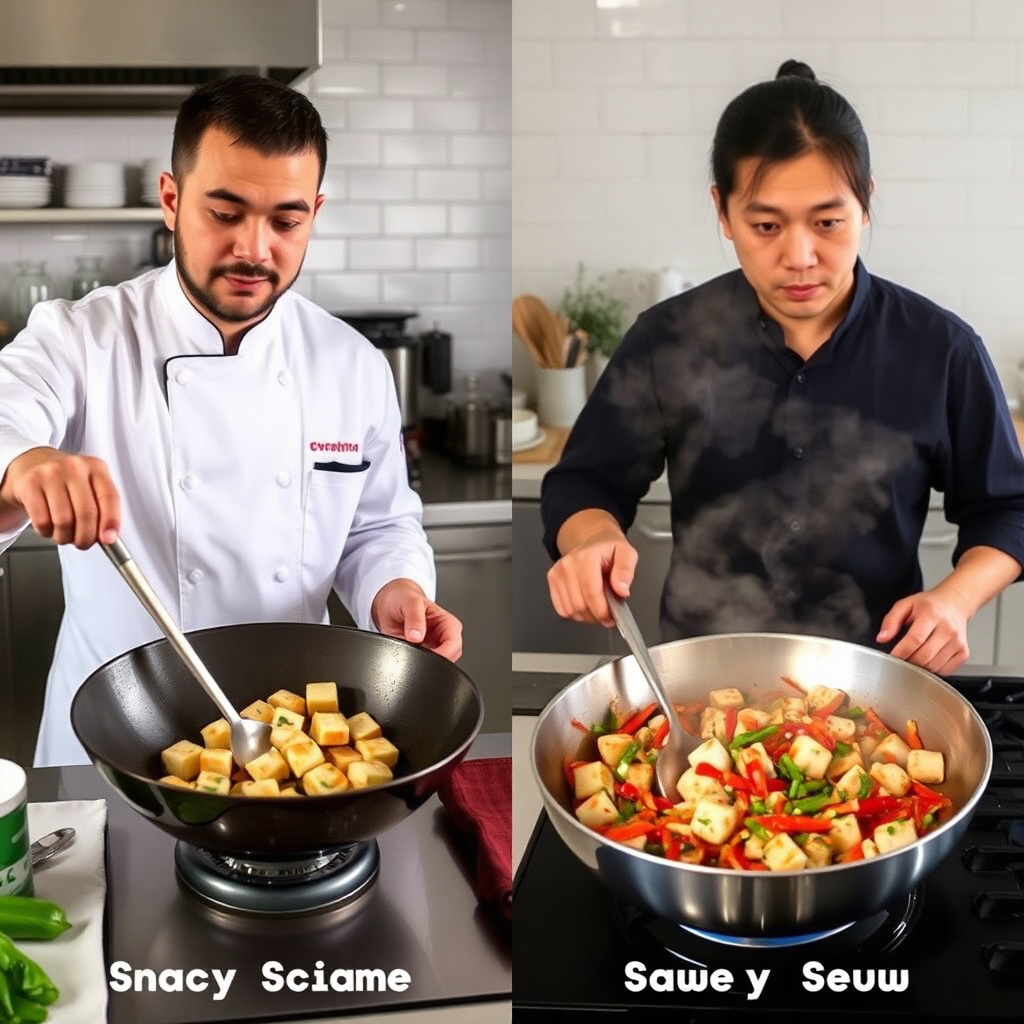
How to Prepare Authentic Mapo Tofu
Mapo Tofu preparation involves first cooking aromatics and ground meat with doubanjiang to release flavors. The soft tofu is then gently added and simmered in the spicy sauce to absorb flavors without breaking apart. Sichuan peppercorn powder is added near the end for that signature numbing effect.
The technique focuses on slow simmering and careful handling of tofu to maintain texture while infusing bold spices evenly, ensuring the sauce is deeply flavorful yet silky.
- Slow simmer tofu in chili sauce
- Use ground meat or omits for vegetarian
- Add Sichuan peppercorn last
For more on this, see our related guide: Is Kung Pao Chicken Spicy? Understanding Its Heat Level and Flavor Profile.
Steps to Make Kung Pao Tofu
Kung Pao Tofu requires firm tofu to be stir-fried until slightly crisp on the outside to hold texture. Aromatics like garlic, ginger, and chilies are stir-fried to fragrance before adding tofu and peanuts. The sauce is poured in and thickened quickly with cornstarch.
This method creates a balanced dish with crunchy and saucy textures. Stir-frying over high heat ensures the sauce coats each piece while peanuts stay crispy and fresh-tasting.
- Crisp tofu by stir-frying
- Quickly thicken sauce with cornstarch
- Add peanuts last for crunch
Nutritional Profiles and Dietary Considerations

Health Aspects of Mapo Tofu
Mapo Tofu is relatively high in protein and can be quite low in carbohydrates, especially when served without rice. The dish can be high in sodium and fat due to fermented bean paste and chili oil, so portion control is advised. Omitting meat makes it suitable for vegetarians but not vegans if traditional sauces contain animal products.
Its richness comes with antioxidants from chili peppers and potential anti-inflammatory benefits from Sichuan peppercorns. Adjusting oil and salt levels can make it a healthier meal option.
- High protein from tofu and optional meat
- Moderate to high sodium
- Rich in antioxidants from spices
Nutritional Considerations in Kung Pao Tofu
Kung Pao Tofu is also protein-rich, featuring a good balance of fats from peanuts and moderate carbohydrates from the sauce. Its moderate heat level makes it accessible for more palates. The peanuts provide healthy fats and fiber but add calories, so moderation is key for calorie-conscious diners.
It can be easily made vegan by confirming sauce ingredients and omitting any animal-based additions. Controlling soy sauce quantity can reduce sodium intake.
- Protein-rich and high in healthy fats
- Calories increased by peanuts
- Lower sodium possible with adjustments
Serving Suggestions and Pairings

Best Pairings for Mapo Tofu
Mapo Tofu pairs excellently with plain steamed white or brown rice, which helps balance its intense flavor and oily texture. Simple vegetable sides like blanched greens or stir-fried bok choy provide freshness. A mild soup can help counter the heat.
Traditional Sichuan cold dishes or pickled vegetables complement the dish’s spicy punch by adding textural contrast and palate-clearing elements.
- Steamed rice for balancing heat
- Blanched or stir-fried leafy greens
- Pickled or cold Sichuan side dishes
Serving Kung Pao Tofu with Complementary Dishes
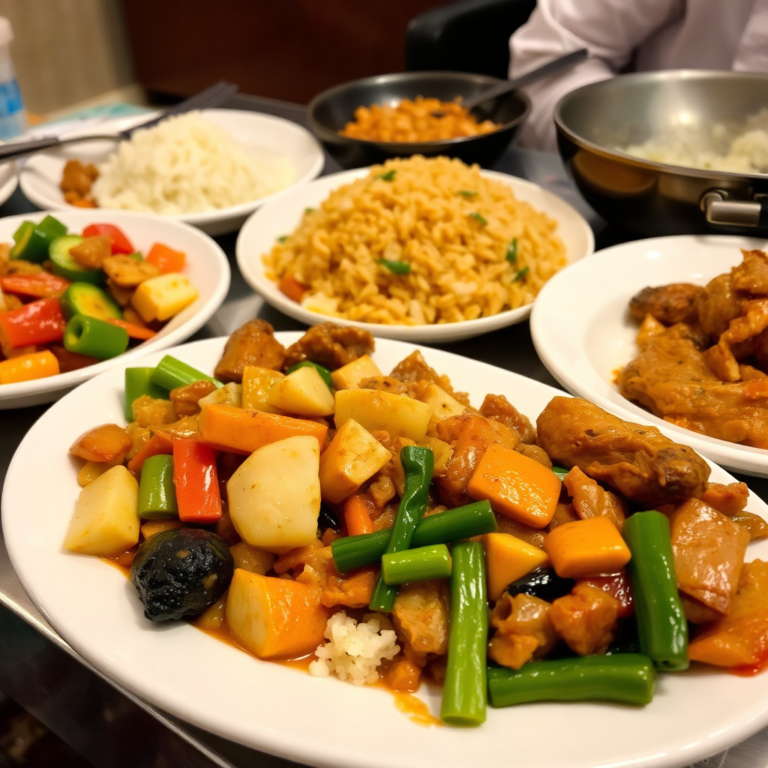
Kung Pao Tofu is often served alongside fried rice or noodle dishes that absorb its flavorful sauce. It pairs well with steamed vegetables like snow peas or broccoli, which add crunch and freshness.
A light broth soup or a cucumber salad can soften the sauce’s tangy heat and provide textural contrast, making for a satisfying, balanced meal.
- Fried rice or stir-fried noodles
- Crunchy steamed vegetables
- Light soups or cool salads
Variations and Regional Differences
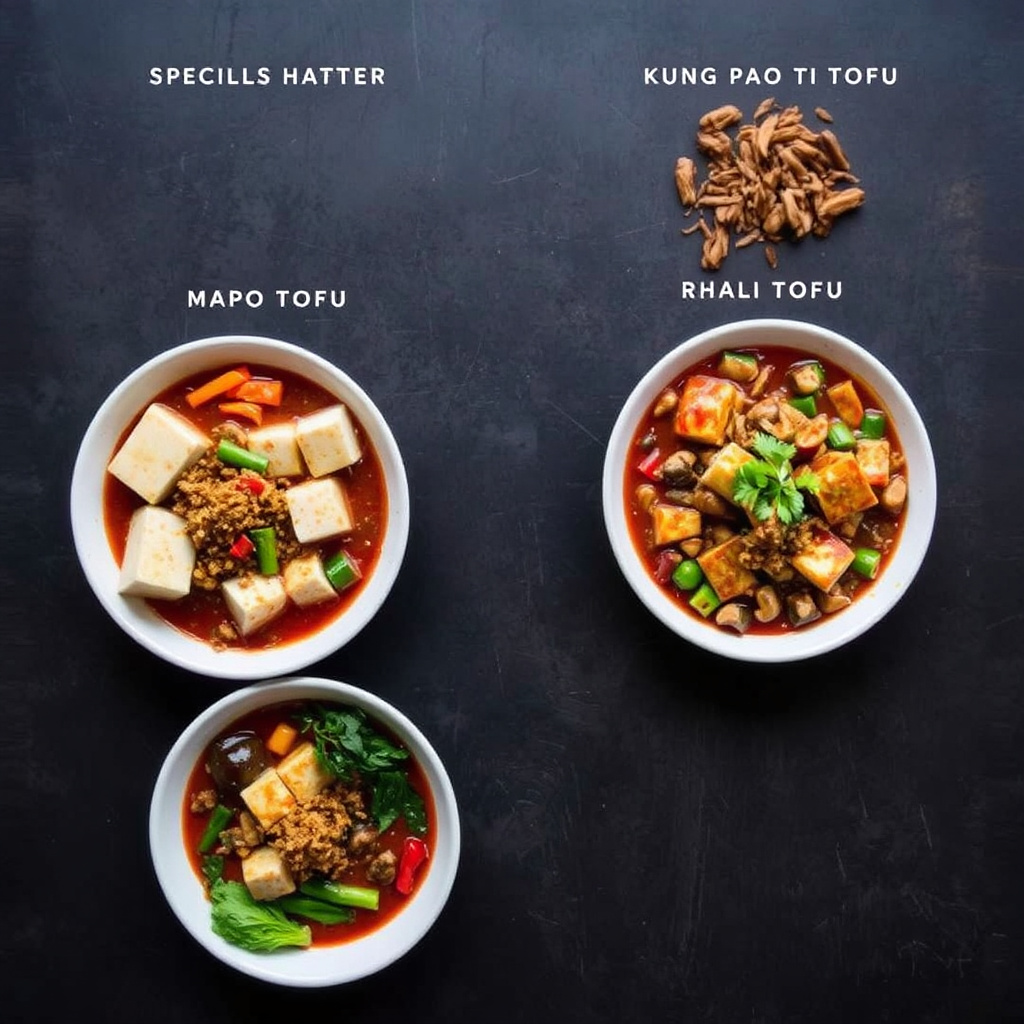
Regional Take on Mapo Tofu
While the classic Mapo Tofu hails from Sichuan, various regions have adapted it by adjusting spice levels or adding local ingredients. Some versions use less chili and more black bean flavor for those sensitive to heat, while others incorporate different proteins such as mushrooms for vegetarian options.
International adaptations may tone down numbing peppercorn spices but retain the characteristic red sauce and silky tofu, making it appealing globally.
- Reduced spice versions for milder taste
- Vegetarian adaptations using mushrooms
- Global variations with toned-down peppercorn
Kung Pao Tofu Around the World
Kung Pao Tofu also shows diverse versions outside China, often integrating different nuts like cashews or adding bell peppers and other vegetables. Some recipes increase sweetness or reduce heat to suit Western taste preferences.
In Sichuan itself, the dish maintains a straightforward profile with a focus on balance between spicy, sweet, and sour, but fusion styles have popularized added textures and flavors.
- Use of different nuts like cashews
- Addition of bell peppers or carrots
- Altered sweetness and spice for global palates
Choosing Between Mapo Tofu and Kung Pao Tofu

When to Pick Mapo Tofu
If you enjoy bold, fiery flavors with a numbing heat and soft tofu texture, Mapo Tofu will satisfy your craving. It works well for those who appreciate layers of spicy and savory tastes with complex aromatic ingredients.
Mapo Tofu is an excellent option when seeking comfort food with heat and a rich sauce to accompany simple staples like rice.
- Enjoy spicy, numbing Sichuan peppercorn heat
- Prefer silken tofu texture
- Crave deeply savory, rich sauces
For more historical context and detailed ingredient information, the Mapo Tofu Wikipedia article provides excellent insights. Mapo Tofu Wikipedia article.
When to Opt for Kung Pao Tofu
Kung Pao Tofu is ideal if you prefer a balanced spicy-sweet flavor with crunchy texture from peanuts and stir-fried tofu. It’s suitable for those who like moderate heat with a glossy, tangy sauce.
This dish pairs well with a variety of sides and is approachable for diners who want a lively yet not overwhelming spicy dish.
- Prefer medium heat with sweet and tangy notes
- Enjoy crunchy texture from peanuts
- Want stir-fried, crispy tofu pieces
Spicy Tofu Dishes Category Comparison
The table below highlights key differences and benefits of Mapo Tofu and Kung Pao Tofu to help you decide.
| Dish | Main Flavor Profile | Tofu Texture | Key Ingredients | Typical Heat Level | Common Accompaniments |
|---|---|---|---|---|---|
| Mapo Tofu | Numbing, spicy, savory | Soft, silken tofu | Doubanjiang, Sichuan peppercorn, ground meat (optional) | High with numbing heat | Steamed rice, leafy greens |
| Kung Pao Tofu | Spicy, sweet, tangy | Firm, stir-fried tofu | Dried chili, peanuts, soy sauce, vinegar | Moderate, sharp chili heat | Fried rice, steamed vegetables |
| Vegetarian Mapo Tofu | Numbing, spicy | Soft tofu | Chili bean paste, peppercorn, mushrooms | Medium to high | Rice, pickled vegetables |
| Fusion Kung Pao Tofu | Sweet, mild spicy | Firm tofu with vegetables | Peanuts, bell peppers, soy sauce | Low to moderate | Noodles, salads |
Frequently Asked Questions
Is Mapo Tofu always made with meat?
Traditional Mapo Tofu often contains ground pork or beef, but vegetarian and vegan versions omit meat, focusing on the spicy bean paste and tofu flavors.
Can I make Kung Pao Tofu less spicy?
Yes, reducing or removing dried chilies and adjusting the amount of chili oil will lower the spice level without compromising the dish’s sweet and savory balance.
What type of tofu is best for these dishes?
Silken or soft tofu is preferred for Mapo Tofu to absorb sauce, while firm tofu works best for Kung Pao Tofu to hold shape during stir-frying.
Are Sichuan peppercorns essential in Mapo Tofu?
Sichuan peppercorns provide the characteristic numbing effect essential to authentic Mapo Tofu, so they are highly recommended for the true flavor experience.
Can Kung Pao Tofu be made vegan?
Yes, by ensuring the sauce contains no animal products and using plant-based cooking ingredients, Kung Pao Tofu can be fully vegan.
Key Takeaways
- Mapo Tofu features numbing Sichuan peppercorn spice with soft tofu.
- Kung Pao Tofu balances spicy, sweet, and tangy flavors with crunchy peanuts.
- Soft tofu suits Mapo Tofu; firm tofu is best for Kung Pao to maintain texture.
- Both dishes offer flavorful options adaptable for vegetarian and vegan diets.
Conclusion
Choosing between Mapo Tofu and Kung Pao Tofu depends mainly on your heat tolerance and texture preference. Mapo Tofu envelops you in a uniquely numbing spice experience, perfect if you enjoy boldly flavored, aromatic dishes with soft, silky tofu. Meanwhile, Kung Pao Tofu offers a more balanced heat with sweetness and satisfying crunch from peanuts, ideal if you’re looking for a moderately spicy stir-fry with varied textures. Understanding the distinct ingredient profiles and traditional cooking methods further guides your choice.
If you favor intense spice and a rich sauce that clings to tender tofu, Mapo Tofu is the clear winner. Those who prefer an interplay of sweet and spicy with a crunch will appreciate Kung Pao Tofu. For vegetarians or vegans, both dishes can be adjusted by omitting meat or animal-based sauces, making them accessible options with versatile flavors. Additionally, regional and fusion variations can lighten or amplify certain elements depending on your taste or occasion, providing flexibility in meal planning.
Start by trying one dish based on your spice preference or desired texture, using authentic recipes that highlight their traditional seasoning. Cooking at home allows you to tweak the heat levels and ingredients to fit your needs. Whether you pick Mapo Tofu’s numbing intensity or Kung Pao Tofu’s sweet and spicy harmony, both are satisfying cookware staples that offer rich, vibrant taste experiences worth exploring.



One Comment