How to Make Gyoza: A Step-by-Step Guide to Perfect Japanese Dumplings
Making gyoza at home involves preparing a flavorful filling, wrapping it in thin dough, and cooking the dumplings to a perfect balance of crispy and tender. The key to excellent gyoza is mastering the fold and cooking technique, which locks in juiciness while creating a golden, crispy bottom.
Gyoza, a popular Japanese dish inspired by Chinese dumplings, offers a delightful blend of savory meat, vegetables, and umami seasonings. They're often pan-fried to achieve a crispy base and steamed to tenderize the wrappers, making the texture contrast essential to the experience. Knowing how to prepare and cook gyoza properly allows you to enjoy authentic flavors fresh from your kitchen.
This article covers selecting ingredients for the best gyoza filling recipe, techniques for wrapping dumplings beautifully, and different cooking methods like pan-frying and steaming. Additionally, it discusses variations for fillings and offers tips to troubleshoot common preparation challenges.
Choosing Ingredients for the Best Gyoza Filling

Selecting the Meat and Vegetables
Traditional gyoza fillings use ground pork due to its fat content, which provides moisture and flavor. However, ground chicken or turkey can be alternatives for leaner options. Fresh ingredients like napa cabbage or regular cabbage should be finely chopped and salted lightly to remove excess water, preventing soggy dumplings.
Complementary vegetables include minced garlic chives or green onions and grated ginger, which add aromatic depth. Balancing textures with crunchy elements helps the filling stay moist but not heavy, maintaining a delicate mouthfeel.
Seasoning and Mixing the Filling
The key seasoning components for gyoza include soy sauce for saltiness, sesame oil for nuttiness, and sometimes a splash of sake or mirin to add subtle sweetness and umami. A small amount of grated garlic or ginger sharpens flavor without overpowering the meat.
When mixing filling ingredients, use your hands or chop lightly to combine everything uniformly. Avoid overmixing, which can toughen the meat proteins, leading to denser dumplings rather than juicy, tender ones.
Mastering Gyoza Wrapping Techniques

Preparing Wrappers and Handling Dough
Gyoza wrappers are typically thin, round discs made from wheat flour and water. You can find pre-made wrappers at Asian markets, or make your own dough from scratch for better control over thickness and texture. Keep wrappers covered with a damp cloth to prevent drying while working.
Lightly flour your surface and hands to keep wrappers from sticking. When preparing filled dumplings, place a small spoonful of filling in the center, being cautious not to overfill, which makes sealing difficult.
Folding Methods for a Perfect Seal
Gyoza are traditionally folded into a half-moon shape with pleated edges on one side. Start by wetting the wrapper edge with water, then fold it over the filling. Use your thumb and pointer finger to pinch and create pleats along the edge, pressing each pleat firmly to seal.
Alternative folding styles include simple half-moons without pleats or round dumplings closed like purses. Seal integrity is crucial to avoid leaks during cooking and preserve juiciness.
Cooking Gyoza: Pan-frying and Steaming Techniques
Pan-frying for a Crispy Texture
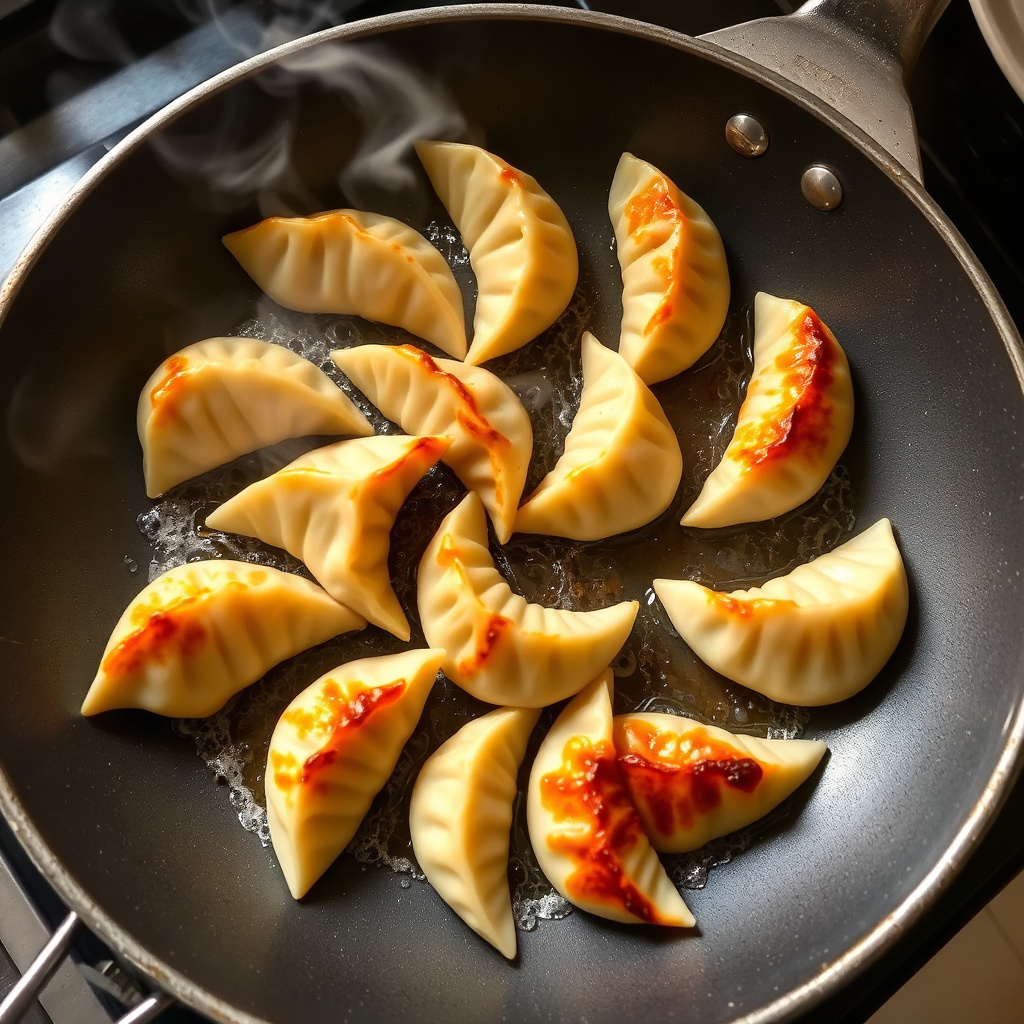
Heat a non-stick or cast-iron skillet over medium-high heat and add a tablespoon of vegetable oil. Place dumplings in the pan flat side down, arranging them without crowding. Cook until the bottoms turn golden brown and crisp, usually 2-3 minutes.
Avoid overcrowding, which traps steam and prevents crisping. A good sear contrasts the soft upper wrappers and juicy filling.
For more on this, see our related guide: How to Make Pot Stickers: A Step-by-Step Homemade Recipe.
Steaming to Cook Through
After the bottoms crisp, add water—about a quarter-cup—to the pan and cover immediately with a lid to steam. This cooks the filling fully and softens the top wrapper, producing the classic gyoza texture contrast.
Steam until water evaporates completely, typically 5-7 minutes. Remove the lid carefully to avoid steam burns.
Variations in Gyoza Fillings and Flavors

Vegetarian and Seafood Fillings
For vegetarian options, a mix of finely chopped shiitake mushrooms, tofu, cabbage, and carrots provides hearty flavor and texture. Season just as you would traditional meat fillings to maintain savory umami.
Seafood gyoza often use shrimp or crab combined with green onions and garlic chives. The protein’s delicate sweetness pairs well with citrus-y dipping sauces.
Adding Heat and Unique Flavors
Incorporate chili oil, finely chopped fresh chili, or Korean gochujang to give gyoza a spicy kick. Using garlic-infused soy sauce or black vinegar for dipping can also add distinctive flavor notes.
Experimenting with fillings such as minced lamb or adding herbs like mint and cilantro can create creative twists while respecting the dumpling’s structure.
Serving Gyoza with Complementary Sauces and Sides

Classic Dipping Sauce Recipes
The traditional gyoza dipping sauce mixes soy sauce with rice vinegar in a 1:1 ratio, with optional chili oil for heat. This combination balances salty, tangy, and spicy notes that enhance the dumpling's filling.
Some variations include adding sesame oil or minced garlic for extra aroma. Fresh scallions or grated ginger can be stirred in for a brighter profile.
For more on this, see our related guide: What Is Gyoza? A Complete Guide to This Popular Japanese Dumpling.
Side Dishes to Accompany Gyoza
Gyoza pairs well with steamed or fried rice, simple miso soup, or pickled vegetables. A light cucumber salad with sesame dressing can refresh the palate between bites.
For a heartier meal, adding stir-fried greens like bok choy or spinach complements the dumplings’ richness.
Troubleshooting Common Gyoza Preparation Issues

Preventing Filling Leakage and Wrapping Failures
Overfilled wrappers can lead to tearing or leaking filling when cooking, so measuring an appropriate amount per dumpling is crucial. Also, wetting wrapper edges properly ensures a tight seal that holds during frying and steaming.
If wrappers are too dry, they will crack; too wet, and they can become sticky or mushy. Adjust moisture by covering dough tightly or adding small splashes of water as necessary.
For additional history and variations of gyoza, you can visit the Gyoza Wikipedia article. Gyoza Wikipedia article.
Fixing Texture Problems in Cooked Gyoza
If gyoza are too soggy, it may be from excess moisture in cabbage or adding too much water when steaming. Salt cabbage and squeeze out liquid before mixing. Avoid lifting the lid mid-steam to maintain proper temperature and texture.
Undercooked filling signals steaming time is too short or heat too low, so use consistent medium heat and watch the cooking duration carefully.
Gyoza Wrapping Options Comparison
Here is a comparison of different gyoza wrappers available, including store-bought and homemade options.
| Wrapper Type | Thickness | Ease of Use | Texture Produced | Cost |
|---|---|---|---|---|
| Pre-made Store-bought | Thin | Very easy | Tender with crisp edges | Low |
| Homemade Wheat Dough | Customizable | Requires skill | Soft and chewy | Moderate |
| Rice Flour Wrappers | Thin | Moderate | Tender but less crispy | Moderate |
| Frozen Wrappers | Thin | Easy | Slightly less fresh texture | Low to moderate |
Frequently Asked Questions
Can I freeze homemade gyoza before cooking?
Yes, freeze wrapped gyoza on a tray before transferring to a freezer bag. Cook without thawing for best texture, adjusting steaming time slightly.
What is the best oil to use for pan-frying gyoza?
Neutral oils like vegetable, canola, or peanut oil are ideal as they have high smoke points and don't overpower gyoza flavors.
How can I make gyoza wrappers from scratch?
Mix wheat flour with warm water, knead until smooth, let rest, then roll thin and cut into circles about 3–4 inches in diameter.
Are gyoza and dumplings the same?
Gyoza are a type of Japanese dumpling, typically pan-fried and with a specific filling style, while dumplings is a broader term covering many forms.
How long should I steam gyoza after frying?
Steam gyoza for about 5 to 7 minutes with a lid on after frying to ensure the filling is fully cooked and wrappers softened.
Key Takeaways
- Use finely chopped cabbage and fatty ground pork for juicy gyoza filling.
- Wet wrapper edges carefully and fold with pleats to seal dumplings tightly.
- Pan-fry first for crispiness, then steam to cook filling thoroughly.
- Experiment with different fillings like seafood or vegetarian options.
Conclusion
Knowing how to make gyoza involves balancing careful ingredient selection, deft wrapping technique, and precise cooking methods to achieve the ideal crispy and tender texture combination. The process may seem intricate initially, but with practice, the rhythmic folding and confident pan-steaming become much more intuitive. This hands-on approach results in flavorful, juicy gyoza that rivals those from restaurants. Understanding the role of wrapper moisture, filling texture, and cooking sequence forms a solid foundation for repeated success.
For those new to homemade gyoza, starting with pre-made wrappers and the classic pork and cabbage filling is advisable. This combination is forgiving and yields authentic flavor with less preparation time. More adventurous cooks might explore seafood or vegetarian fillings, experimenting with seasonings like chili oil or sesame to reflect personal tastes. Selecting between pan-frying methods and steaming allows for flexibility depending on desired texture and time available. Each variant offers delicious results once foundational skills are mastered.
To take the next step, gather fresh ingredients and practice folding a small batch to refine seal and cooking timing. Following the steps outlined gives a clear path toward restaurant-quality dumplings without the need for special tools or exotic ingredients. With experience, you can customize recipes and even host gyoza-making gatherings to share this delicious part of Japanese culinary tradition.


