How to Make Sashimi at Home: A Step-by-Step Guide
Making sashimi at home begins with selecting the freshest fish, followed by precise slicing techniques to highlight the fish’s natural flavors. Preparing sashimi involves handling raw fish carefully, using sharp knives, and serving it elegantly with traditional accompaniments like soy sauce, wasabi, and pickled ginger.
Sashimi is a Japanese delicacy prized for its simplicity and freshness, making it essential to understand how quality and preparation impact the final dish. By mastering the basics, anyone can enjoy sashimi outside of a restaurant setting, appreciating the delicate textures and clean taste that define this seafood specialty.
This article will explore the types of fish best suited for sashimi, how to prepare your workspace and tools, detailed slicing methods, plating suggestions, and safety tips to minimize health risks associated with eating raw fish.
Choosing the Best Fish for Sashimi

Understanding Sashimi-Grade Fish
Sashimi-grade fish are caught and handled to preserve freshness and reduce the risk of parasites. These fish are typically flash-frozen shortly after catch to kill parasites, which makes them safer for raw consumption. Always source sashimi-grade fish from reputable seafood markets or suppliers.
Different fish species vary in texture and flavor, influencing which is best for your sashimi platter. Common sashimi selections include tuna (maguro), salmon (sake), and yellowtail (hamachi), each offering unique taste and mouthfeel.
- Look for firm, translucent flesh with a clean ocean scent
- Avoid fish with discoloration or strong fishy odors
Selecting the Best Fish Cuts
The cut impacts not only presentation but also eating experience. For sashimi, cuts should be thick enough to retain texture but thin enough to be easily eaten. Skilled chefs typically slice fish into pieces about 1/4 inch thick.
Certain parts of the fish, such as the belly (toro) in tuna, are prized for their fat content providing a buttery texture. Selecting cuts with the right balance of fat and lean parts can elevate your sashimi.
- Opt for firm muscle cuts rather than flaky or fatty portions for beginners
- Avoid skin and bones, trimming carefully
Preparing Your Tools and Workspace

Essential Sashimi Slicing Tools
A very sharp, long, and thin knife is key to making clean sashimi slices that preserve the fish’s texture. Traditional sashimi knives include yanagiba, sujihiki, and deba knives, each designed for precision cutting of raw fish.
Keeping your knife sharp and clean helps prevent tearing the flesh. Use a whetstone for sharpening and sanitize with hot water and vinegar before and after use.
- Yanagiba knife for single slicing motions
- High-quality cutting board to avoid dulling your knife
For more on this, see our related guide: What Is Sashimi? A Complete Guide to This Japanese Culinary Delight.
Setting Up a Hygienic Workspace
Cross-contamination is a risk especially when handling raw fish. Prepare a clean cutting surface, sanitize all tools, and wash your hands thoroughly before starting.
Chilling your fish and cutting board before slicing helps keep the fish firm, resulting in cleaner cuts. Avoid preparing sashimi in warm environments to maintain freshness.
- Use separate boards for fish and other ingredients
- Work in a cool area to slow bacterial growth
Sashimi Slicing Techniques

Basic Slicing Methods
The key slicing technique for sashimi is a single smooth stroke, pulling the knife towards you rather than a sawing motion. This helps preserve the structure and appearance of each slice.
Position the fish with the grain running perpendicular to your knife’s movement to maximize tenderness. Practice steady hand control to produce uniform slices consistently.
- Keep fingers curled inward to avoid injury
- Use a gentle but firm grip on the knife
Advanced Cutting Styles
Besides the standard rectangles, sashimi can be cut in styles such as usuzukuri (paper-thin slices), which is common for delicate white fish, or kogata (small cubes) for an elegant presentation.
Mastering these styles requires experience with knife pressure and speed. Usuzukuri, for example, demands slicing almost parallel to the board to achieve translucent thinness.
- Experiment with thickness to enhance texture
- Tailor cuts to the fish species for best results
Serving and Presentation
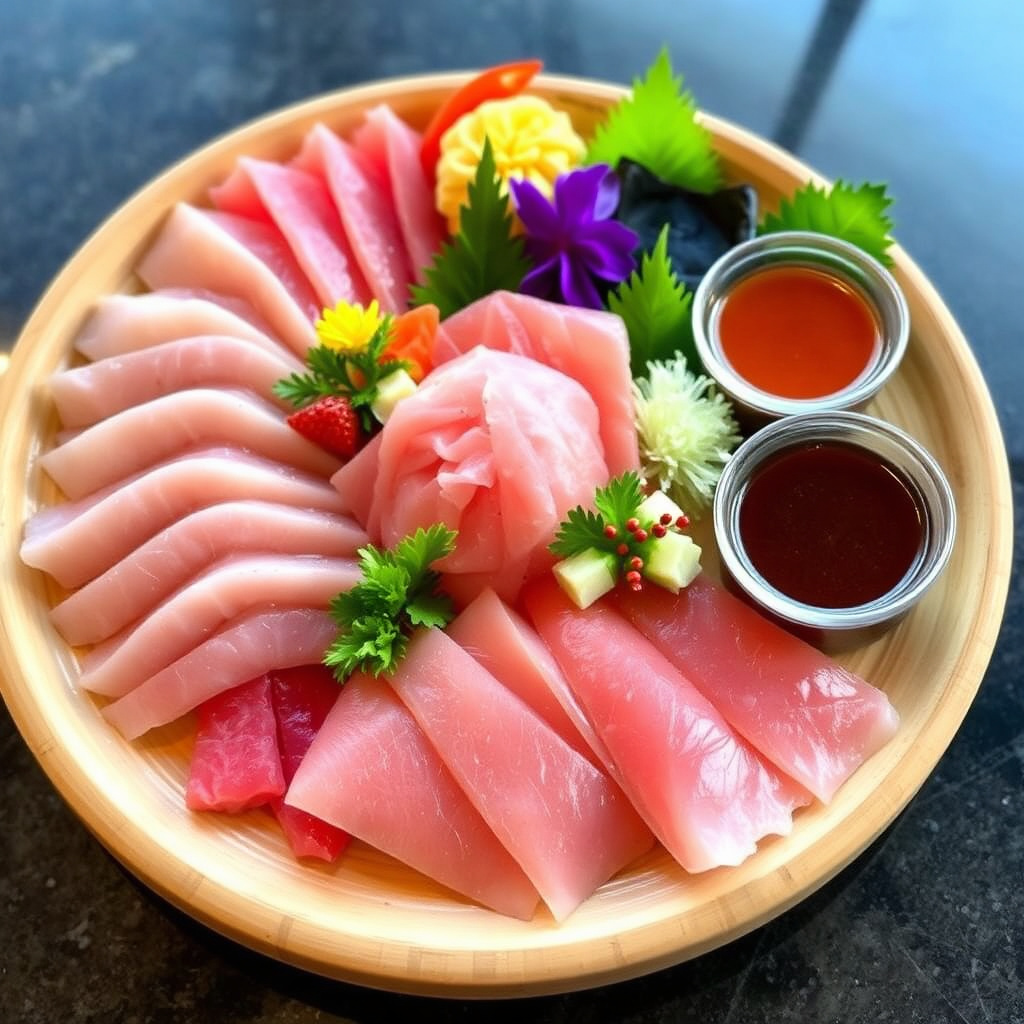
Traditional Garnishes and Accompaniments
Sashimi is typically served with soy sauce, wasabi, and pickled ginger which add depth and contrast while complementing the fresh fish. Thinly sliced daikon radish or shiso leaves often serve as garnish and palate cleansers.
Arranging sashimi attractively on chilled plates or wooden boards can highlight its colors and textures, enhancing the dining experience.
- Add lemon slices or edible flowers for visual appeal
- Serve cold to maintain freshness and texture
For more on this, see our related guide: What’s in a Spicy Tuna Roll? Ingredients and Variations Explained.
Pairing Sashimi with Drinks
Light, crisp beverages like sake, dry white wine, or green tea complement sashimi’s delicate flavors without overpowering them. Sake, especially Junmai varieties, enhance umami richness of raw fish.
Avoid heavy or sweet drinks which can clash with sashimi. Keeping drinks simple allows the fresh fish to remain the star.
- Chill sake to about 10°C for best flavor
- Serve tea hot or iced based on preference
Safety Tips When Making Sashimi

Preventing Foodborne Illness
Raw fish may contain parasites and bacteria; freezing fish at -20°C for at least 7 days can kill parasites. Always check that your fish supplier follows proper freezing protocols.
Avoid cross-contamination by using separate utensils for other foods and wash hands thoroughly. Consume sashimi shortly after preparation to minimize bacterial growth.
- Use a food thermometer to verify proper freezing
- Discard fish with off smells or slimy textures
For more detailed background on sashimi varieties and history, consult the Sashimi Wikipedia article. Sashimi Wikipedia article.
Storage and Handling
Keep sashimi-grade fish refrigerated at temperatures close to 0°C and consume within 24 hours of purchase for optimal freshness. If you must wait longer, freeze as recommended.
Thaw frozen fish slowly in the refrigerator rather than at room temperature to prevent bacterial proliferation. Handle fish minimally to avoid bruising the flesh.
- Wrap fish tightly to prevent freezer burn
- Label with freeze and thaw dates for safety
Comparison of Popular Fish Types for Sashimi
This table compares common sashimi fish types based on flavor, texture, availability, and preparation ease.
| Fish Type | Flavor Profile | Texture | Availability | Preparation Difficulty |
|---|---|---|---|---|
| Tuna (Maguro) | Mild with subtle sweetness | Firm and meaty | Widely available | Moderate |
| Salmon (Sake) | Rich and buttery | Soft and smooth | Widely available | Easy |
| Yellowtail (Hamachi) | Slightly oily and savory | Tender, slightly oily | Seasonal | Moderate |
| Snapper (Tai) | Mild and clean | Firm and delicate | Seasonal | Challenging |
| Octopus (Tako) | Mild with subtle brine notes | Chewy | Available fresh and frozen | Difficult |
Frequently Asked Questions
What does 'sashimi-grade' mean?
Sashimi-grade fish is fish that has been handled and processed under strict guidelines to be safe for raw consumption, often flash-frozen to kill parasites.
Can I use frozen fish for sashimi?
Yes, properly frozen fish can be safe for sashimi if it has been frozen at the right temperature for an adequate time to kill parasites.
What knife is best for slicing sashimi?
A yanagiba or a similar long, thin, and very sharp knife is typically used for clean, smooth sashimi slices.
How thick should sashimi slices be?
Sashimi slices usually range from 1/8 inch to 1/4 inch thick, depending on the fish and desired texture.
How should sashimi be served?
Serve sashimi chilled with soy sauce, wasabi, pickled ginger, and garnishes like shredded daikon or shiso leaves for an authentic experience.
Key Takeaways
- Always select sashimi-grade, fresh fish from trusted sources
- Use sharp, appropriate knives for clean slicing
- Maintain strict hygiene and proper storage to ensure safety
- Serve sashimi attractively with traditional garnishes and dipping sauces
Conclusion
Mastering how to make sashimi hinges on understanding the importance of freshness, technique, and safety. This process starts with sourcing the right fish, prioritizing sashimi-grade quality, and maintaining a hygienic environment. Precise slicing using a sharp yanagiba or sujihiki knife preserves the texture and flavor integral to the sashimi experience. Combining these factors results in a dish that celebrates the delicate taste and artistry of raw fish preparation.
Different fish types offer varied flavor and texture profiles suitable for sashimi, so your selection can tailor the dining experience. For instance, salmon provides rich and buttery slices that are friendly for beginners, while tuna and yellowtail offer firmer textures favored by sashimi enthusiasts. Properly freezing fish and following safety recommendations minimizes health risks, allowing you to confidently prepare sashimi at home.
If you're ready to try making sashimi, start by sourcing fresh, sashimi-grade fish and equipping yourself with a high-quality slicing knife. Practice your slicing technique on firmer fish such as tuna or salmon, then present your slices with traditional accompaniments like soy sauce and wasabi. This step-by-step focus will enrich your appreciation for Japanese culinary art and bring restaurant flavors into your kitchen.



One Comment